Imagine standing in front of a menu with 40 options. You think you’re reading, comparing, weighing pros and cons. In reality, your brain is running a fast, emotional triage: little flares of want, meh, or nope that you barely notice.
Why Your Feelings Decide Before You Do
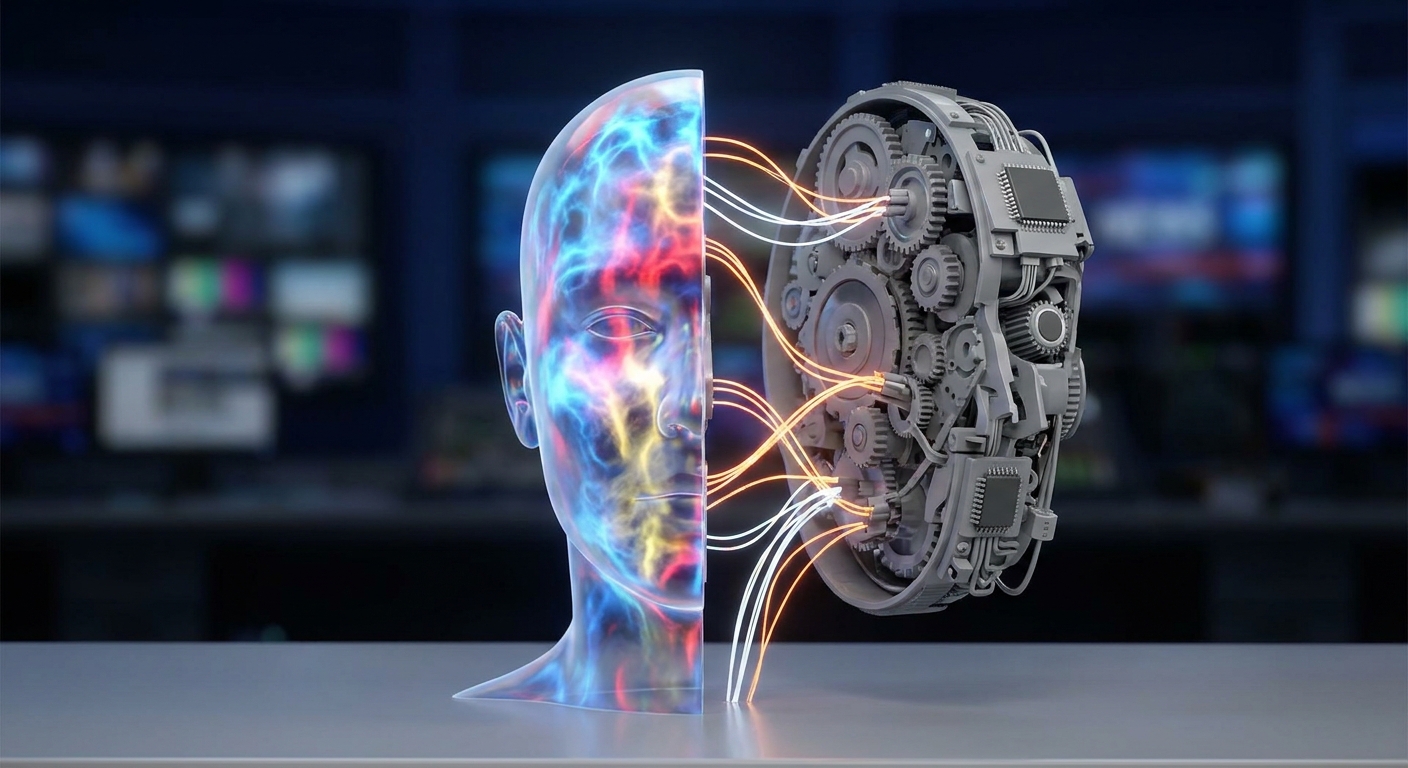
Emotions are often framed as the opposite of reason. Yet, in neuroscience and psychology, a different picture has emerged: emotions are not enemies of rationality but prerequisites for it.
Psychologist Antonio Damasio’s work with patients who had damage to the ventromedial prefrontal cortex is a classic example. These individuals could reason logically about choices, but they struggled to actually make decisions in real life. They had lost access to the emotional “tags” that normally help us evaluate options.
They weren’t too emotional. They weren’t emotional enough.
In other words: without emotions, reason stalls.
Emotions as Fast, Compressed Data
Think of emotions as compressed summaries of your past experiences, genetic biases, and current bodily state.
- Anxiety: “Something here has been dangerous or costly, or resembles a past danger.”
- Curiosity: “There might be new information or rewards here; explore.”
- Guilt: “You may have violated a social rule that matters for belonging.”
- Pride: “This action aligns with your values or improves your status.”
Research in affective neuroscience suggests that emotional systems evolved long before our higher reasoning abilities. The amygdala, for instance, can react to threatening stimuli in milliseconds via a “low road” route (LeDoux, 1996) — faster than conscious awareness.
These rapid reactions aren’t random. They are goal-oriented, tuned to survival and social functioning. They compress a lifetime of learning into a gut feeling.
The Somatic Marker Hypothesis
Damasio’s somatic marker hypothesis proposes that our body state (heart rate, gut sensations, muscle tension) gets linked to certain choices through experience. When you face a similar situation later, your body responds before you can articulate why.
In laboratory tasks like the Iowa Gambling Task, participants gradually learn to avoid “bad” decks of cards before they can explain what’s wrong. Their bodies (measured by skin conductance) react to risky decks several draws before their conscious minds catch up.
Your emotional reactions are not noise; they are early, embodied predictions.
When Emotion and Logic Disagree
Of course, emotions are not infallible. They’re optimized for typical environments, not every modern scenario.
- Phobias: A spider elicits fear far out of proportion to the actual threat.
- Social anxiety: A presentation at work triggers the same physiological alarm as physical danger.
- Financial panic: Market fluctuations can produce fear-based decisions that harm long-term outcomes.
Yet even here, emotions have a logic: they overestimate threats in domains where, historically, the cost of underestimating was high.
Counterintuitively, trying to eliminate emotion from decisions often backfires. People who suppress emotions too aggressively show:
- More impulsive decisions
- Poorer memory for details
- Less satisfaction with their choices
In a 2007 study, Richard Robins and colleagues found that individuals with balanced emotional awareness (able to notice, label, and reflect on feelings) made more consistent life decisions and reported higher well‑being than those who minimized or ignored emotions.
The problem is not having feelings—it's not being able to read or regulate them.
Emotions as Value Signals
Every decision implicitly asks: “What matters here?” Logic can compare options, but it cannot tell you what you value. That’s the job of emotion.
When you feel:
- Enthusiasm about a creative project → value: expression, novelty, contribution.
- Irritation in a conversation → value: respect, fairness, clarity.
- Sadness after a move → value: connection, familiarity, identity.
Psychologist Nico Frijda described emotions as “action tendencies”—they push you towards or away from something based on its personal significance.
This means our feelings are not simply reactions to the world; they are reflections of what we care about, consciously or not.
A Simple Framework: Notice, Name, Negotiate
Instead of fighting emotions, you can collaborate with them. Here’s a practical three-step process:
1. Notice
Before a decision, ask: “What am I feeling in my body right now?”
Look for:
- Tightness in chest or jaw
- Heat in face
- Restlessness
- Sinking or heaviness
These are often the first clues.
2. Name
Research by Matthew Lieberman and colleagues shows that putting feelings into words ("affect labeling") reduces amygdala activity and increases prefrontal regulation.
Try to upgrade from “good/bad” to more precise labels:
- Not just stressed → maybe overwhelmed, rushed, or uncertain.
- Not just upset → maybe hurt, disrespected, or disappointed.
The more granular your vocabulary, the more nuanced your decision can be.
3. Negotiate
Ask your emotion three questions:
What are you trying to protect or promote for me? (What value or need?)
How accurate is your information in this situation? (Past vs present?)
3. What would a small, reversible step look like? (Test instead of commit.)
For example:
- You feel intense anxiety about a job change.
- Value: security, competence, stability.
- Accuracy: Is this a catastrophic risk or a manageable stretch?
- Small step: Talk to people in the role, negotiate a trial period, update your CV.
The goal is not to obey or override emotion, but to integrate it.
Real-World Example: The Entrepreneur’s Dilemma
Consider a founder deciding whether to pivot their startup.
- Logic: The numbers say the current model isn’t working.
- Emotion: Fear of failure, loss of identity, anxiety about letting the team down.
If they ignore emotions, they may delay the pivot until it’s too late, paralyzed by unacknowledged dread.
If they only follow fear, they might abandon the project prematurely.
A wiser route:
- Surface the emotions: “I’m afraid this pivot will prove I was wrong. I feel shame imagining investors’ reactions.”
- Extract the value: The real concern is reputation, responsibility, and self-respect.
- Design aligned action: Pivot openly, communicate transparently with investors, frame the change as learning rather than failure.
Now, emotion doesn’t block the pivot. It shapes how the pivot is done.
Practical Takeaways You Can Try Today
- Before big decisions, pause for a body scan.
- Ask: “What am I feeling, and where?” This brings emotional data into awareness.
- Write a 2-column list: Logic vs Feeling.
- Left: Reasons and facts.
- Right: Emotions and bodily sensations.
- Then ask: “What value is each feeling pointing to?”
- Use “Even though, I choose…” self-talk.
- “Even though I feel anxious about this presentation, I choose to prepare and practice.”
- This validates emotion without letting it dictate behavior.
- Cultivate emotional granularity.
- Once a day, name your emotion with as much nuance as possible. Over time, your decisions gain resolution.
- Schedule decisions, don’t make them in emotional spikes.
- If you’re in a wave of anger or euphoria, set a time 24 hours later to confirm or revise the choice.
The Quiet Partnership Between Feeling and Thought
The old story said: emotions are storms to endure, and reason is the lighthouse. The science-based story is subtler: emotions are part of the navigation system itself.
They:
- Narrow the field of options
- Highlight what matters to you
- Warn you when something violates your values
- Motivate action when logic alone would hesitate
You will never be “above” your emotions. But you can become fluent in them—treating each feeling not as a command, but as a coded message about your priorities, history, and hopes.
Decisions do not become purely rational when emotions quiet down. They simply become less informed.
The real skill is not to feel less, but to listen better.