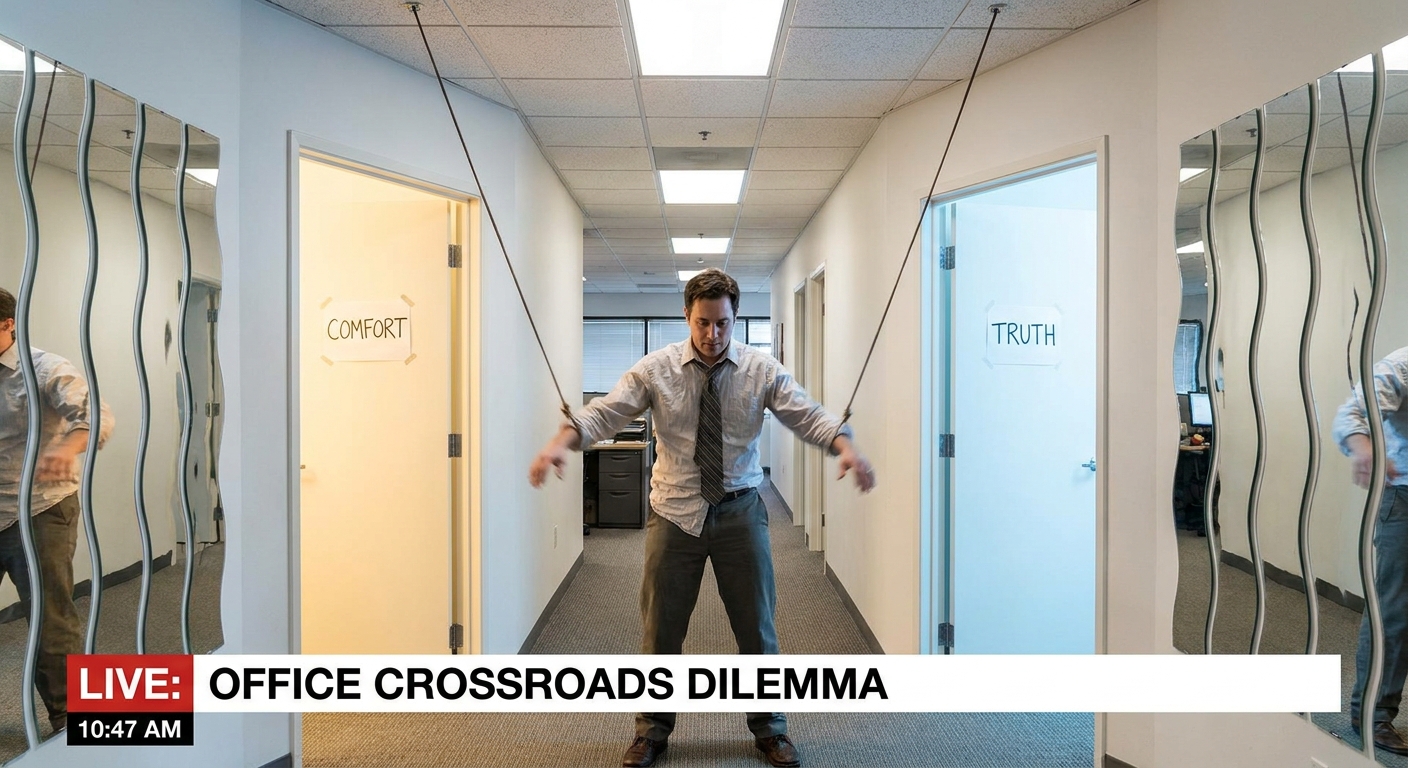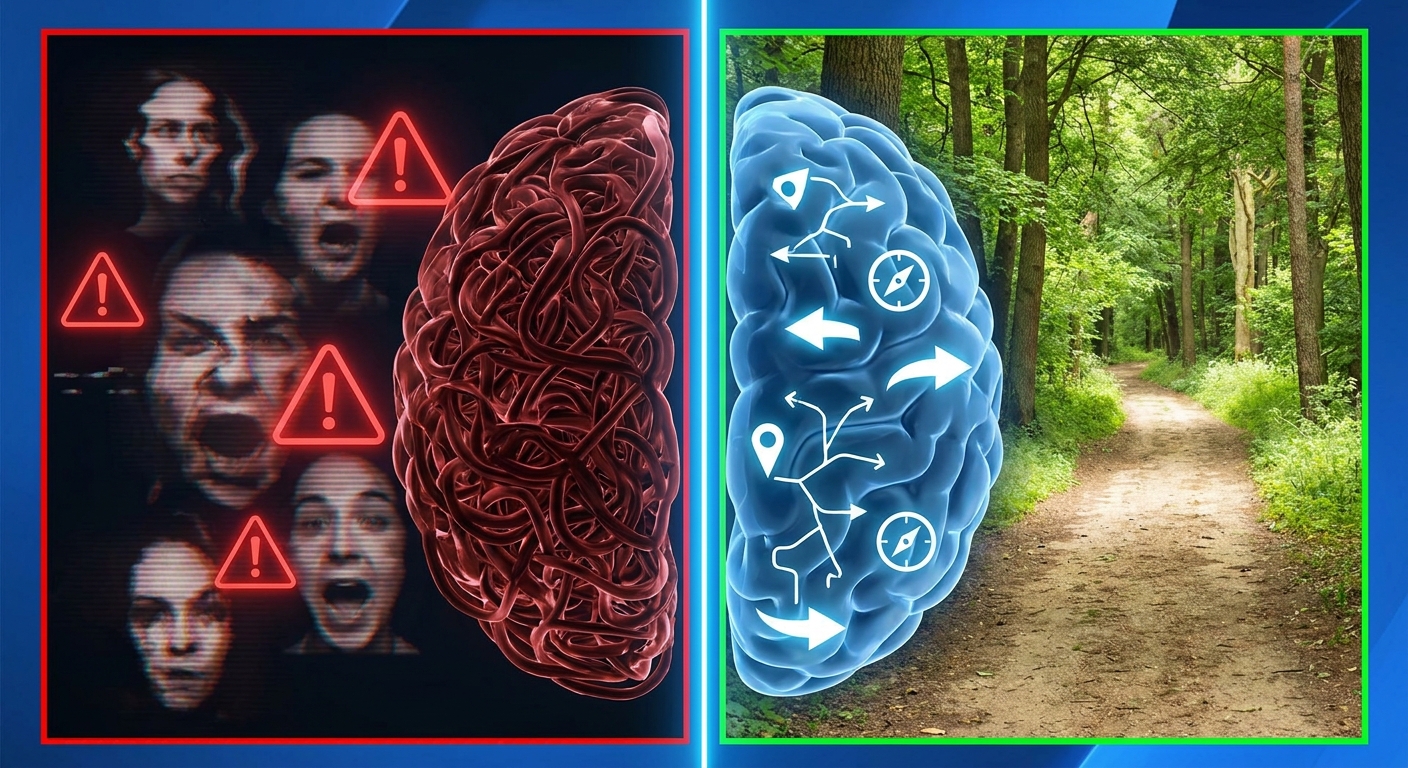
The phrase “cognitive bias” sounds like a defect—something to root out and fix. But the story is more nuanced.
Are Biases Always Bad?
Many biases are side effects of heuristics: fast and frugal rules of thumb that usually work well in uncertain, information-poor environments. The problem arises when we apply them where they don’t fit.
So the real question is not “How do I eliminate bias?” but “When does this mental shortcut serve me—and when does it mislead me?”
Let’s compare three major heuristics and their associated biases, with examples of when they help and when they hurt.
1. The Representativeness Heuristic: Patterns Everywhere
Heuristic: Judge probability by how much something resembles a typical case.
This is often useful. If something looks, moves, and sounds like a predator, treat it like one.
When It Helps
- Medical intuition: Experienced doctors quickly recognize classic patterns (e.g., textbook heart attack symptoms) and act fast.
- Social perception: You sense that a situation feels “off” because it matches a familiar template of past problems.
Pattern recognition is a powerful survival tool.
When It Hurts: The Conjunction Fallacy
Bias: You think specific, detailed scenarios are more likely than simple ones.
Classic example: The “Linda problem.” Tversky and Kahneman (1983) described Linda as a 31-year-old, single, outspoken, and deeply concerned with social justice. People were asked which is more probable:
- (A) Linda is a bank teller.
- (B) Linda is a bank teller and active in the feminist movement.
Most chose (B), but logically, (A) must be at least as likely, because all feminist bank tellers are a subset of all bank tellers. The detailed story feels more representative of Linda, so the brain picks it over bare probability.
Real-world cost: In investing, we favor detailed narratives (“a green energy startup led by a visionary founder in a booming sector”) over plain ones (“small-cap stock with uncertain returns”), overestimating their likelihood of success.
Practical Use
- Harness it: Use representativeness in domains where you have deep, well-calibrated experience (e.g., your profession).
- Guard against it: When stakes are high, ask: “Am I choosing the better story or the better probability?” Write down the simple, base-rate version.
2. The Availability Heuristic: What Comes to Mind Counts More
Heuristic: Judge frequency or risk by how easily examples come to mind.
This works surprisingly well for everyday things: if you can’t remember anyone biking this winter, chances are not many people did in your city.
When It Helps
- Rapid threat detection: If several colleagues have recently been laid off, elevated concern about job stability is rational.
- Health vigilance: If two close friends your age develop high blood pressure, taking your own cardiovascular health more seriously is appropriate.
Your memory is a rough but often decent proxy for frequency.
When It Hurts: Risk Distortion
Bias: Dramatic, recent, or emotionally charged events feel more common than they are.
- Media coverage: Plane crashes and terrorist attacks dominate news cycles, skewing our perception. Research by Slovic and colleagues shows people systematically overestimate rare but catastrophic risks and underestimate common, mundane ones (like heart disease).
- Personal memory: A painful breakup can make “relationships that work” feel rarer than they truly are.
Counterintuitive finding: Even professionals misjudge risk when vivid cases loom large. Studies of physicians show they may overestimate likelihood of rare diseases after seeing a single memorable case.
Practical Use
- Harness it: Use the emotional jolt of a vivid case to start inquiry, not to end it. Let it trigger data seeking.
- Guard against it: Ask, “Is this impression from my memory, my news feed, or actual statistics?” Then look up base rates.
3. The Affect Heuristic: Feelings as Information
Heuristic: Use your immediate emotional reaction as a summary judgment.
If something makes you feel calm, safe, or excited, you infer it’s good; if it scares or disgusts you, you infer it’s bad.
When It Helps
- Rapid moral decisions: Feelings of disgust or empathy can guide social behavior in complex situations where explicit rules are fuzzy.
- Complex trade-offs: When you’re selecting a job, city, or partner, pure calculation is impossible. Emotional resonance helps narrow options.
Neuroscientist Antonio Damasio’s work with patients whose emotional processing was impaired showed that without feelings, they were paralyzed by even simple decisions.
When It Hurts: Affective Polarization
Biases: You underestimate risks of things you like and overestimate risks of things you dislike.
Paul Slovic found that if people liked a technology (say, nuclear energy), they judged it as lower risk and higher benefit; if they disliked it, they saw it as high risk and low benefit—even when given the same information.
Real-world examples:
- Lifestyle choices: We downplay health risks of habits we enjoy (certain foods, alcohol) and exaggerate dangers of things we already avoid.
- Political judgments: If you like a politician or party, scandals feel “overblown”; if you dislike them, minor faults become proof of corruption.
Practical Use
- Harness it: Use strong emotions as a signal to slow down, not speed up. Ask, “What is this feeling trying to tell me?”
- Guard against it: Explicitly separate questions: “How much do I like this?” vs. “How risky or beneficial is it objectively?” Answer them separately.
Bias and Heuristic: A Simple Comparison Framework
When you notice a mental shortcut, run it through three questions:
Environment: Is this a high-uncertainty, low-information situation (good for heuristics) or a data-rich, analyzable one (good for deliberation)?
Stakes: Are the consequences minor (it’s fine to rely on intuition) or major (worth slowing down)?
Feedback: Do you get clear, rapid feedback here (which trains intuition) or slow, noisy feedback (where biases go uncorrected)?
Heuristics shine when:
- Environments are similar to ones you’ve seen often.
- Feedback is quick and accurate.
- Errors are low-cost.
- You import them into novel, complex domains.
- Feedback is delayed or ambiguous.
- Emotions, groups, or incentives distort what you notice.
They become biases when:
Why Pure Rationality Is Not the Goal
It’s tempting to dream of becoming a purely rational decision-maker. But our cognitive system was not built for that; it was built for bounded rationality—Herbert Simon’s term for satisficing: finding options that are good enough under constraints.
Some key points:
- Deliberation is costly. System 2 thinking uses energy and time. You can’t run full cost–benefit analyses on every choice.
- Intuition can be expert. In domains like chess or firefighting, years of exposure teach System 1 good patterns. Gary Klein’s work on naturalistic decision making shows how experienced firefighters make split-second, accurate calls.
- Overcorrection is a risk. Trying to scrutinize everything can lead to indecision, missed opportunities, and exhaustion.
The trick is not to suppress heuristics but to allocate them wisely.
Building a Bias-Aware Decision Toolkit
Here are practical structures that respect your heuristics while limiting their damage:
1. Pre-Mortems for Big Decisions
Before committing to a major choice (job move, investment, project), imagine it’s a year in the future and it has failed badly.
Ask:
- “What most likely went wrong?”
This technique, popularized by psychologist Gary Klein, helps counteract optimism, confirmation bias, and representativeness-driven storytelling.
2. Checklists in Known Bias Zones
Identify your personal hotspots—common bias zones include:
- Hiring and promotion
- Health and diet choices
- Major purchases
- Romantic relationships
- “Have I looked for disconfirming evidence?”
- “What are the base rates?”
- “Am I choosing the better story or better data?”
Create a minimal checklist like:
Use it only when stakes are high.
3. External Perspectives and Structured Dissent
Other people have different biases. You can enlist this diversity if you:
- Ask people you trust to critique your reasoning, not just your conclusion.
- In teams, assign a rotating “red team” whose explicit job is to argue the opposite case.
Research on group decision-making suggests that structured dissent improves outcomes more than forced consensus.
4. Personal Bias Map
Over a month, note decisions that didn’t turn out well. For each, ask:
- “Which bias best explains my original thinking?”
Patterns will emerge: maybe you’re chronically overconfident in timing, or particularly susceptible to sunk costs. Target those with specific habits (prediction logs, exit rules, etc.).
The Healthier Question: “Compared to What?”
The right benchmark is not an ideal, unbiased mind. It’s the you who:
- Rarely reflects,
- Acts mostly on impulse and anecdote,
- And doesn’t learn systematically from mistakes.
Against that baseline, small, evidence-based adjustments go a long way.
Heuristics got your ancestors through ice ages, predators, and complex social groups. They’re not your enemy. But in a world of algorithms, investments, medical options, and information overload, their blind spots matter more than ever.
Treat biases as predictable misfires of generally useful tools. With that framing, you can be both forgiving of your mind—and more skillful in how you guide it.