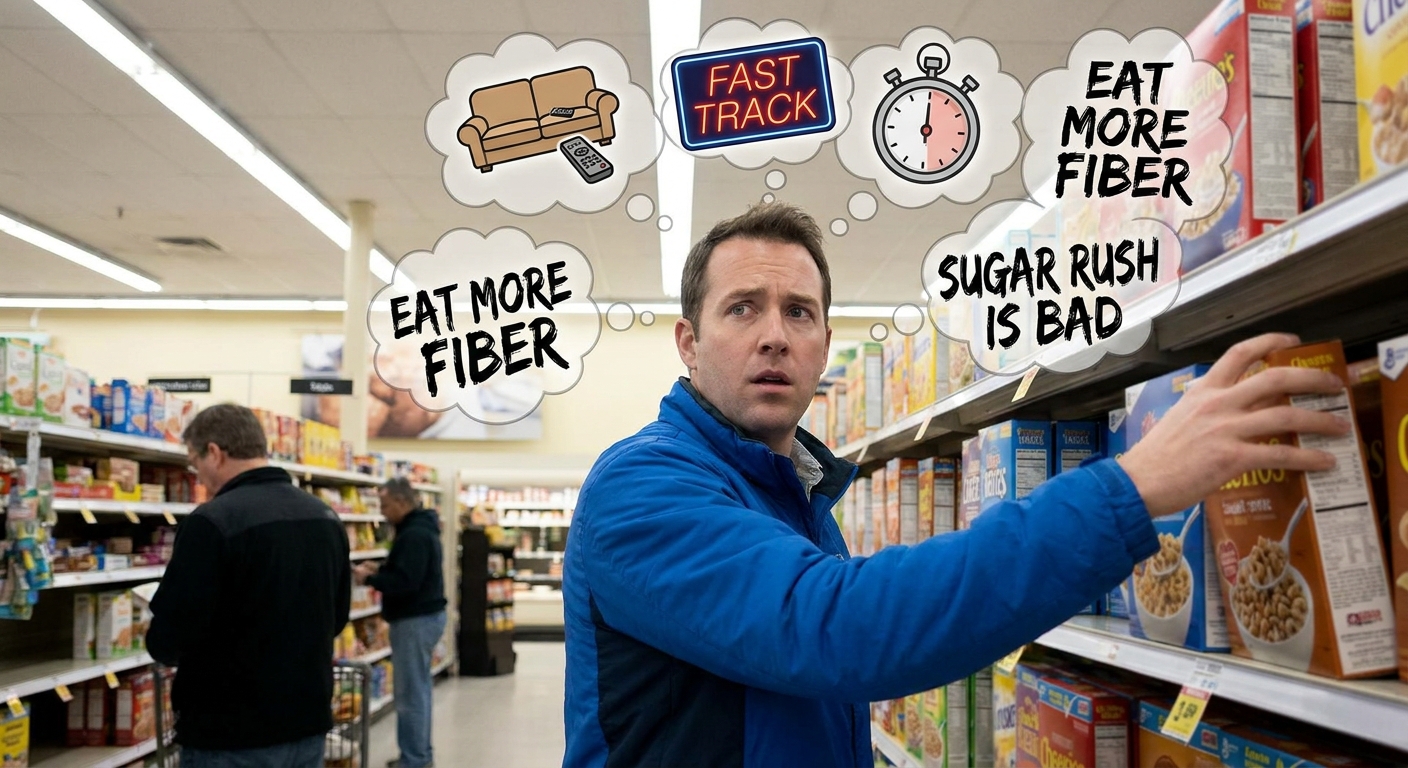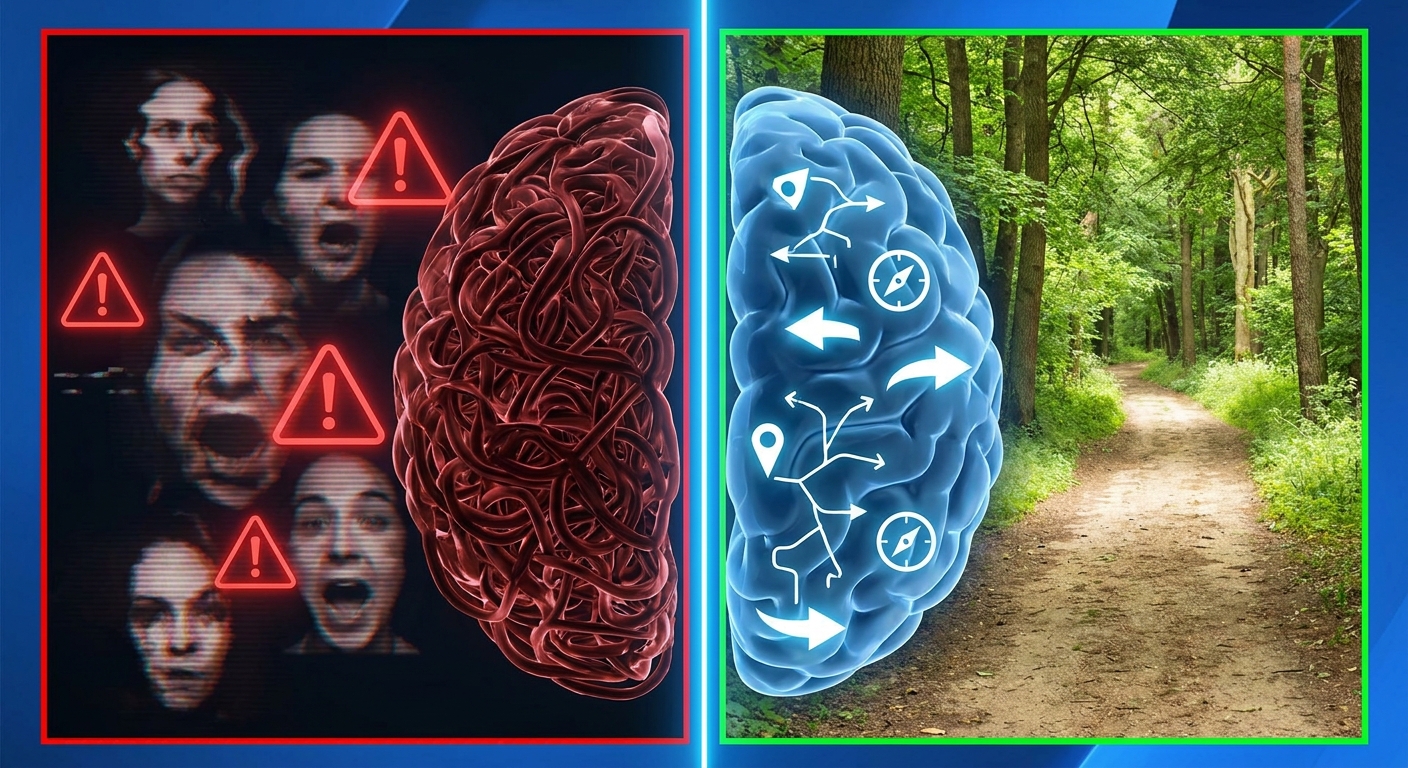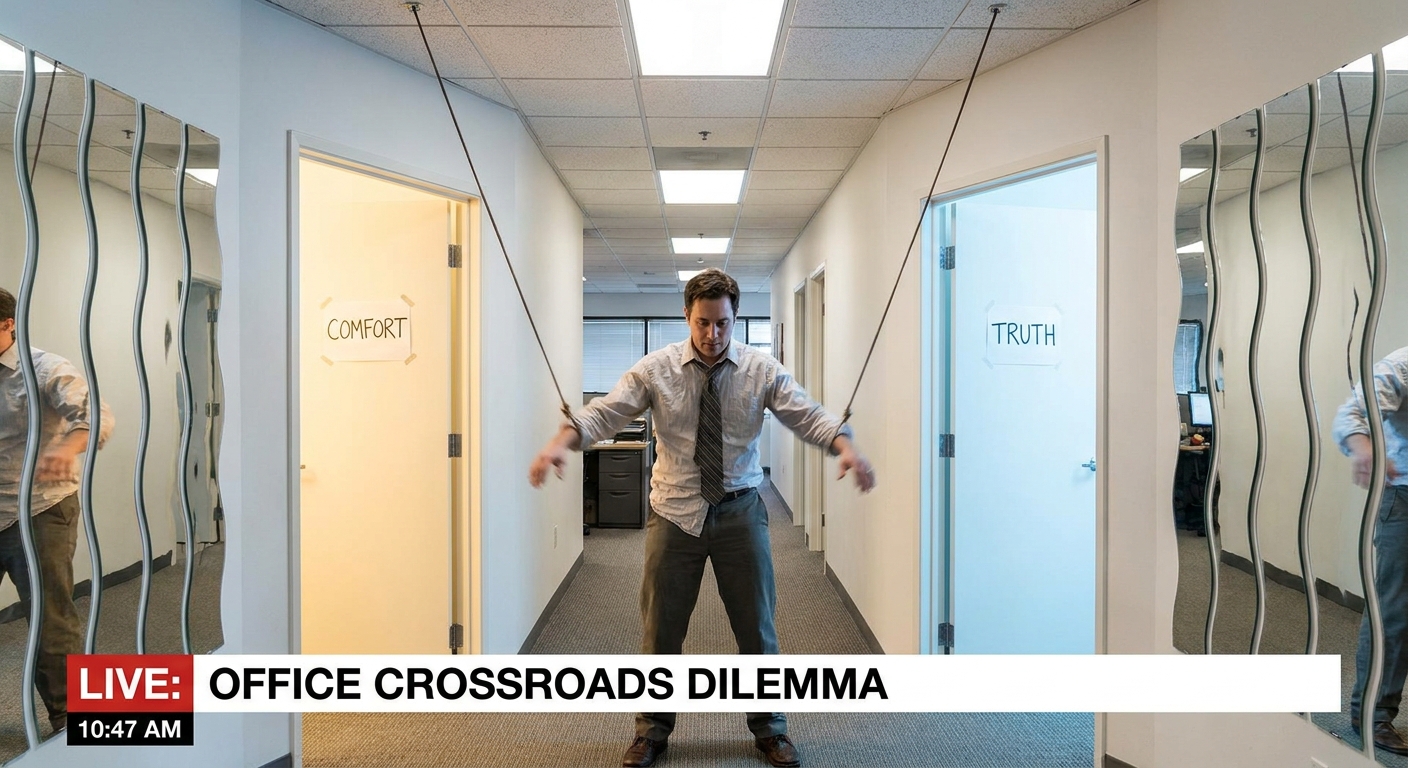
You don’t have to be irrational to think irrationally.
Why Smart People Fall for Predictable Mental Traps
Most of the time, your brain is doing exactly what it evolved to do: make fast, reasonably accurate decisions with limited information. The problem is that these shortcuts—cognitive biases—were tuned for survival in small groups on the savannah, not for navigating modern life, financial markets, news feeds, and social media.
Psychologists Amos Tversky and Daniel Kahneman popularized the idea that we rely on mental shortcuts (heuristics) that systematically skew our judgments. These biases aren’t bugs on the fringe of human thinking; they are built into the architecture of our minds.
In this article, we’ll look at how a few core biases operate beneath awareness, what the research shows, and—crucially—how to spot them in the wild.
The Confirmation Bias: Why Evidence Rarely Changes Our Minds
Definition: Confirmation bias is our tendency to seek, interpret, and remember information that confirms what we already believe.
The Classic Demonstration
In a famous 1960 study, psychologist Peter Wason asked participants to figure out a simple rule behind a sequence of three numbers, like 2-4-6. Most people tested only sequences that could confirm their hypothesis (e.g., 8-10-12 to test “even numbers increasing by two”) instead of trying to disprove their guess (e.g., 3-9-27).
The actual rule was simply “three increasing numbers,” but many participants never discovered it because they avoided disconfirming evidence.
How It Shows Up in Real Life
- News consumption: We follow sources that align with our politics and dismiss conflicting outlets as biased.
- Health and fitness: We cherry-pick studies that support our diet or workout plan and ignore others.
- Relationships: Once we’ve labeled someone as “difficult” or “brilliant,” we selectively notice behaviors that fit the label.
Counterintuitive Takeaway
Confirmation bias is often strongest in people who see themselves as rational and data-driven. The more confident you are in your reasoning, the more clever you become at rationalizing away conflicting evidence.
Try this: The next time you’re certain you’re right, ask: “What would I expect to see if I were wrong?” Then actively look for that.
Availability Bias: When Vivid Beats True
Definition: Availability bias is our tendency to judge the likelihood of an event by how easily examples come to mind.
The Airplane vs. Car Paradox
After highly publicized plane crashes, people often become more afraid of flying and switch to driving—despite the fact that cars are statistically far more dangerous.
In a well-known 1978 study, Tversky and Kahneman showed participants the letter K and asked whether more English words start with K or have K as the third letter. Most people said “start with K,” though the latter is actually more common. Words like kite or king come to mind more easily than asked or baker, so our brains misread ease of recall as frequency.
Everyday Distortions
- Risk perception: News coverage of shark attacks makes us fear the ocean more than unhealthy daily habits.
- Career decisions: We overestimate the odds of “overnight success” because those stories are memorable, while quiet, slow career paths are less visible.
- Health anxiety: A friend’s dramatic medical story weighs heavier than base rates and statistics.
Try this: When something feels common or dangerous, ask: “Is this actually frequent, or just vivid?” Look up base rates instead of trusting your mental highlight reel.
Anchoring: The First Number Wins
Definition: Anchoring is our tendency to rely too heavily on the first piece of information we receive (the “anchor”) when making judgments.
The Spinning Wheel Experiment
In a classic 1974 study, Tversky and Kahneman asked participants to spin a rigged wheel of fortune that landed on 10 or 65, then estimate the percentage of African countries in the United Nations. Those who saw 10 gave much lower estimates than those who saw 65. A random, irrelevant number influenced a factual judgment.
How It Shapes Your Choices
- Salary negotiations: The first number mentioned powerfully tugs the final outcome.
- Shopping: A “Was $299, now $149” tag makes $149 feel like a bargain—even if it’s still overpriced.
- Goal setting: Your initial idea of what’s “reasonable” subtly caps your ambition.
Try this: Before hearing any numbers, write down your independent estimate or desired outcome. This acts as your own anchor and reduces the pull of arbitrary ones.
The Fundamental Attribution Error: Blaming People, Ignoring Situations
Definition: The fundamental attribution error is our tendency to over-attribute others’ behavior to their personality and under-attribute it to their situation.
Classic Study in Action
In a 1967 study by Jones and Harris, participants read essays either supporting or criticizing Fidel Castro. Even when they were told the writer had been assigned a position and had no choice, participants still inferred that the essay reflected the writer’s true beliefs.
We instinctively see behavior as a window into character, even when we know the situation is constraining the person.
Everyday Friction
- Someone cuts you off in traffic: “They’re a jerk,” not “Maybe they’re rushing to an emergency.”
- A colleague misses a deadline: “They’re lazy,” not “Maybe they’re overwhelmed or unclear about priorities.”
Interestingly, we don’t apply this rule to ourselves. When we mess up, we cite context: “I was tired, busy, stressed.”
Try this: When judging someone else, force yourself to generate three plausible situational explanations before concluding it’s about their character.
Why Knowing About Bias Isn’t Enough
You might assume that learning about biases makes you immune to them. Unfortunately, this is another bias: the bias blind spot.
In a 2002 study, Emily Pronin and colleagues found that people readily recognized biases in others yet believed they themselves were less biased than average. Awareness doesn’t automatically translate into change.
So what actually helps?
1. Slow Down High-Stakes Decisions
Biases thrive on speed. When the cost of error is high—hiring, investing, medical choices—intentionally slow the process:
- Write down the decision criteria before reviewing options.
- Seek out disconfirming evidence on purpose.
- Sleep on it if possible; emotional intensity exaggerates biases.
2. Use External Scaffolding
Rely less on your unaided brain:
- Checklists for recurring decisions (e.g., evaluating job offers).
- Decision matrices where you score options against consistent criteria.
- Pre-commitment: set rules in calm moments that constrain your future self (e.g., “I don’t trade stocks on days with big news headlines.”)
3. Involve Other Brains
Different people have different "default" biases:
- Ask someone who disagrees with you to make the best possible case for the opposite side.
- In teams, assign a rotating "devil’s advocate" whose explicit role is to challenge the dominant view.
4. Track Your Predictions
Create a simple prediction log:
- Write down your prediction, your confidence (0–100%), and your reasoning.
- Revisit in 3–6 months and compare outcomes.
Patterns will reveal where biases most distort your thinking (overconfidence, wishful thinking, etc.).
The Most Practical Mindset Shift
Cognitive biases are not signs that you are broken; they are signs that you are human.
The goal is not to become a coldly rational machine. It’s to understand where your mental shortcuts serve you—and where they reliably mislead you—so you can design small guardrails.
Instead of striving to be unbiased, aim to be bias-aware and correction-seeking:
- Notice when your certainty feels suspiciously pleasant.
- Ask what evidence you’d need to change your mind.
- Build habits that counteract your known weak spots.
The invisible puppet strings of bias don’t have to control you. Once you can see them, you can start, slowly and imperfectly, to cut them.