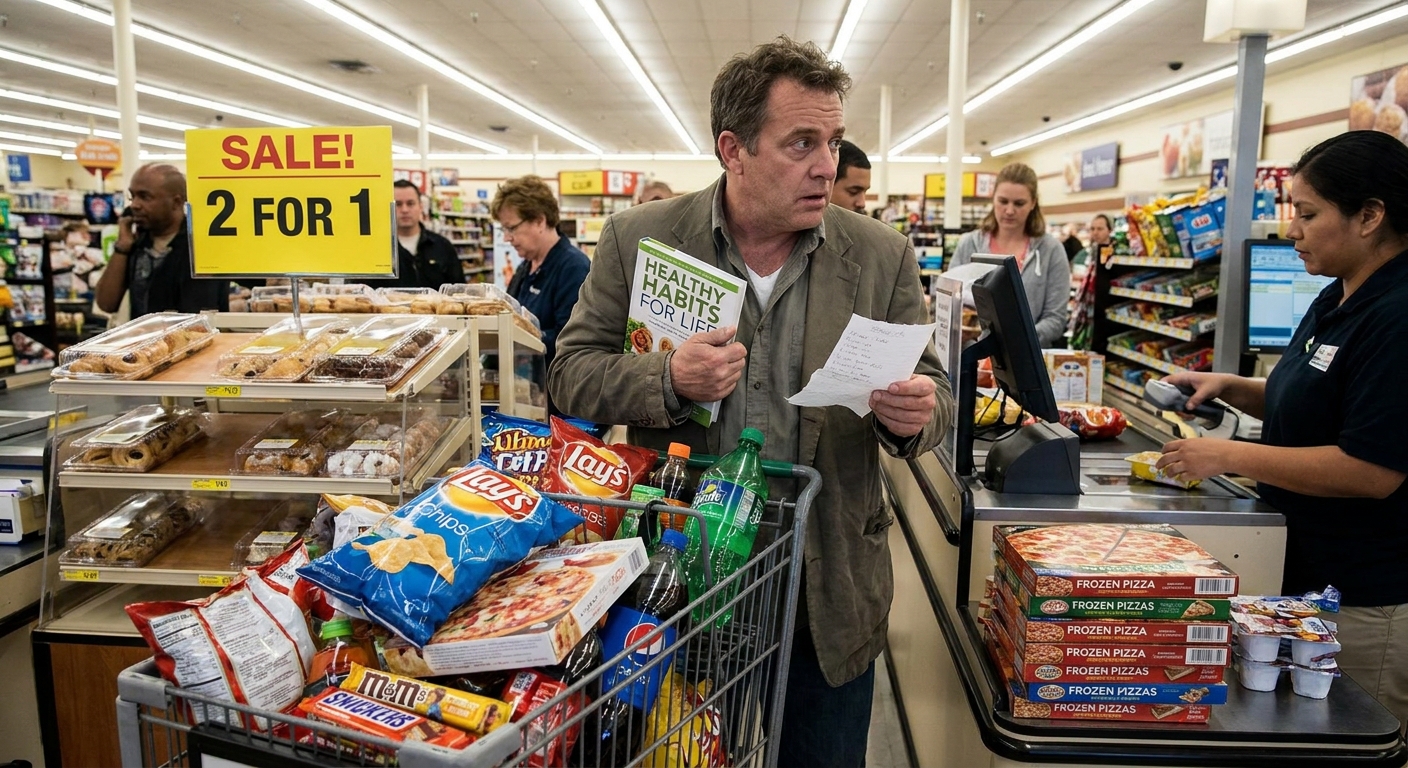
For much of the 20th century, economics had a central character: Homo economicus, the perfectly rational decision-maker.
The Revolt Against the Rational Robot
This fictional creature never made impulsive purchases, never miscalculated risks, and always maximized utility. Real humans, as you may have noticed, do not behave this way.
Behavioral science emerged in part as a quiet rebellion against this unrealistic model. By integrating psychology into economic thinking, it has reshaped how we understand saving, spending, investing, and policy.
Let’s explore how — and why it matters for your wallet and society at large.
Traditional Economics vs. Behavioral Economics: A Quick Comparison
Think of this as a friendly rivalry between two views of human nature.
The traditional view (Homo economicus)
Assumes people:
- Have stable preferences
- Evaluate options rationally
- Weigh costs and benefits objectively
- Are good at using statistics and probabilities
The behavioral view (Homo sapiens)
Finds that people:
- Have context-dependent preferences
- Rely on heuristics (mental shortcuts)
- Are influenced by framing, emotions, and social norms
- Systematically deviate from rational models in predictable ways
Behavioral economics doesn’t throw math away; it asks math to make room for humans.
Loss Aversion and Prospect Theory: The New Foundation
The cornerstone of behavioral economics is Prospect Theory, developed by Daniel Kahneman and Amos Tversky.
Traditional theory: people care about final wealth levels.
Prospect Theory: people care about gains and losses relative to a reference point, and losses loom larger than gains.
The value function
Prospect Theory suggests a value curve that:
- Is steeper for losses than gains (loss aversion)
- Is concave for gains (diminishing sensitivity — the difference between $100 and $200 feels bigger than between $1,100 and $1,200)
- Is convex for losses (we take more risks to avoid losses)
Real-world implications
- Investors hold losing stocks too long (reluctant to realize losses).
- People buy insurance against even small losses that feel salient.
- Marketing that frames outcomes as losses (“Don’t miss out”) is more persuasive than equivalent gain framing.
This single change — modeling how people actually feel about risk — produced a theory that better fits observed behavior in labs and markets.
Mental Accounting: How We Label Money Changes Everything
Standard economics treats money as fungible: your brain should treat $100 the same regardless of its source.
Behavioral research, spearheaded by Richard Thaler, shows we create mental accounts:
- “Rent and bills” money
- “Fun and entertainment” money
- “Bonus windfall” money
- “Sacred savings” money
Evidence in action
- People are more likely to splurge with tax refunds than with salary, even if both add equally to total wealth.
- In experiments, when given a “rebate,” people spend more of it than an equivalent “bonus,” because a rebate feels like house money being returned.
Mental accounting helps explain real behaviors like budgeting, saving, and overspending — all hard to capture in classical models.
Practical takeaway
You can use mental accounting deliberately:
- Create separate accounts for long-term savings vs everyday spending.
- Give savings accounts emotionally resonant names (“Freedom Fund” instead of “Account #4893”).
- Treat windfalls as opportunities to accelerate goals, not permission to abandon them.
Present Bias and Self-Control: Why We Under-Save for the Future
Traditional models often assume exponential discounting: we value the future slightly less than the present in a consistent way.
Behavioral research finds something more dramatic: present bias.
We heavily favor now over later:
- Today vs. tomorrow feels like a big difference.
- 365 vs. 366 days in the future feels almost the same.
This leads to time-inconsistent preferences — what your Tuesday-self wants conflicts with what your Saturday-self will actually do.
The Save More Tomorrow program
Economists Richard Thaler and Shlomo Benartzi designed a famous program to harness, not fight, these biases.
Core ideas:
- People pre-commit to increase their retirement contributions later, when they get a raise.
- Contributions go up automatically with each raise, so take-home pay doesn’t shrink.
- Opting out is possible but requires effort.
Results were striking: in early implementations, average saving rates nearly tripled over a few years.
This is behavioral science at its best: using our quirks (inertia, loss aversion, present bias) to help us do what we say we want.
Nudges: Small Design Choices with Big Effects
In their book Nudge, Richard Thaler and Cass Sunstein popularized the idea of choice architecture: arranging options in ways that steer people’s behavior while preserving freedom of choice.
Famous examples:
- Automatic enrollment in pension plans dramatically increases participation.
- Default organ donation settings dramatically raise consent rates.
- Placing healthy food at eye level in cafeterias increases selection.
These small changes don’t force anyone. They exploit predictable patterns:
- We stick with defaults.
- We follow social norms.
- We avoid complex decisions when overwhelmed.
Behavioral science here is less about shouting “be rational!” and more about whispering “let’s make the rational choice the easier one.”
Markets Aren’t Always Perfect — and That’s Useful to Know
Classical economics often leans on the idea that markets are efficient: prices reflect all available information; you can’t systematically outsmart them.
Behavioral findings challenge this in key ways:
- Overreaction and bubbles: Overconfidence and herding can inflate asset prices beyond fundamentals.
- Underreaction: People may be slow to update beliefs, leading to momentum effects.
- Limited attention: Investors miss or misinterpret relevant information.
Researchers like Robert Shiller have used behavioral insights to explain market volatility, speculative bubbles, and crashes — phenomena hard to square with purely rational models.
What this means for individuals
- Be wary of stories that explain market moves with perfect hindsight.
- Recognize your own overconfidence and herd instincts when investing.
- Simple, diversified strategies often outperform complex, emotionally-driven ones.
From Ivory Tower to Everyday Life
Behavioral economics isn’t just about markets and policies. It changes how you can:
- Negotiate: Recognize anchoring, loss aversion, and reference points.
- Spend: Notice when “sales” exploit your biases.
- Save: Use automatic transfers and mental accounting to your advantage.
- Design workplaces: Use defaults, feedback, and social norms to encourage ethical, productive behavior.
Perhaps the most profound shift is this: instead of assuming people should be rational and blaming them when they aren’t, behavioral science starts with how people actually are and builds from there.
In a world where money decisions are rarely coldly logical and always tinged with emotion, that’s not just intellectually interesting — it’s deeply practical.