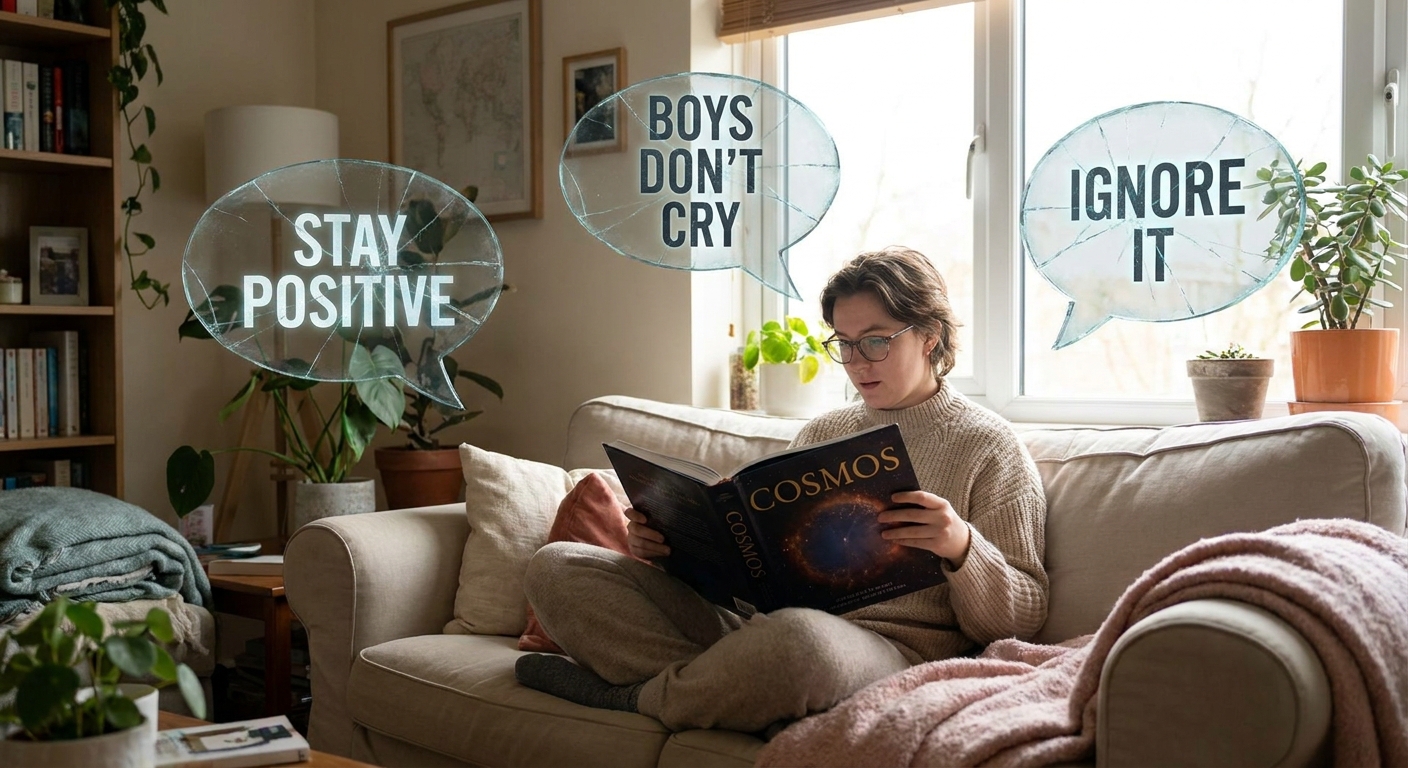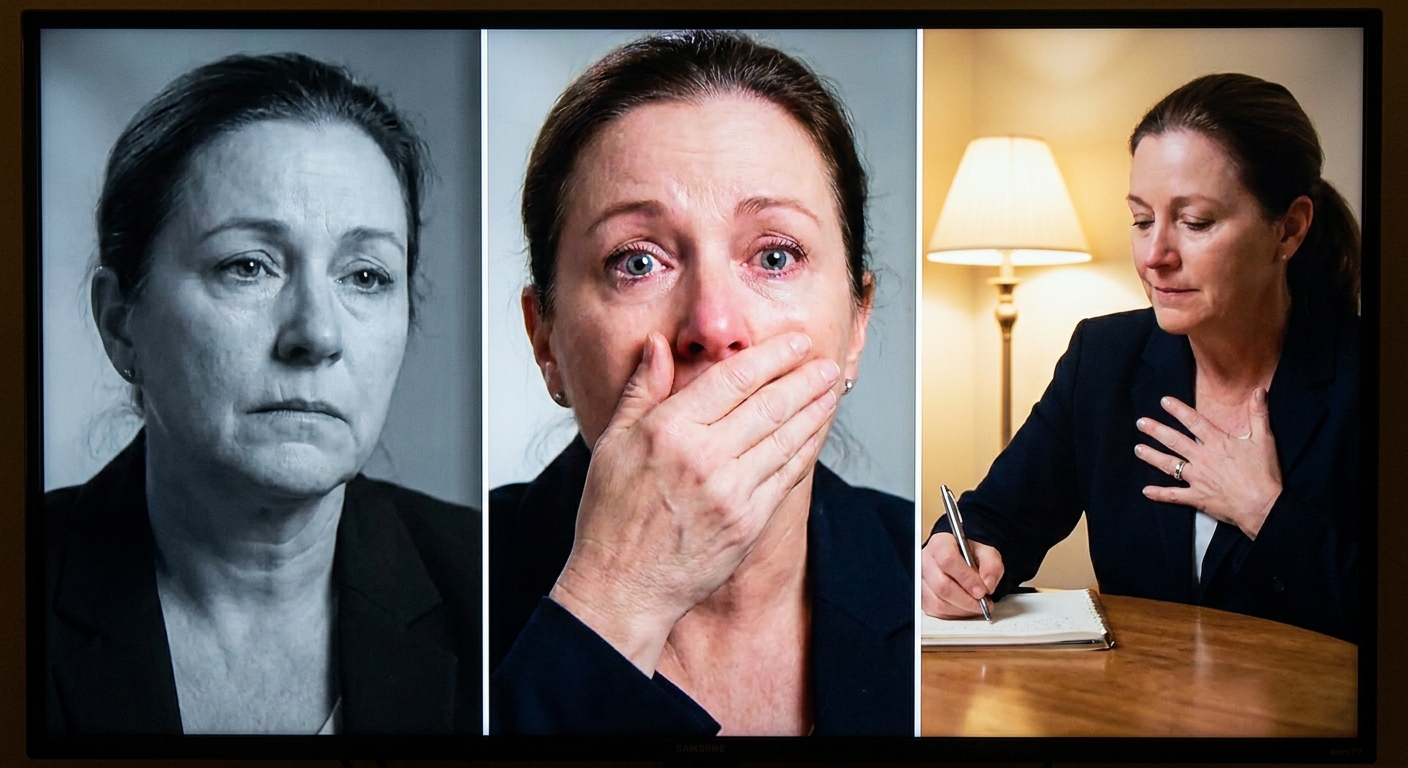
We often use “mood,” “emotion,” and “feeling” interchangeably. “I’m in a bad mood.” “I’m feeling emotional.” “I have a bad feeling about this.”
Why the Distinctions Matter
In everyday conversation, this is fine. But if you want to understand your mind more deeply—or change your inner life more effectively—these distinctions turn out to be surprisingly useful.
Different types of affective experience:
- Arise from different processes in the brain and body.
- Last for different lengths of time.
- Are influenced by different factors.
Once you can tell them apart, patterns that looked like chaos begin to look like a system you can actually work with.
Emotion: Short-Lived, Situation-Specific, Action-Oriented
Emotions are relatively brief responses to specific events, real or imagined. They involve:
- Changes in body state (heart rate, breathing, muscle tone)
- Changes in attention (what you notice)
- Changes in motivation (what you want to do next)
They are, in essence, your brain’s rapid assessments: “This is good, pursue it” or “This is bad, avoid or change it.”
Typical features:
- Duration: seconds to minutes (sometimes longer if repeatedly re-triggered)
- Focus: usually about something (“I’m angry at…”, “I’m afraid of…”)
- Function: prepare specific actions (fight, flee, approach, repair)
Example:
- You get an unexpected email critiquing your work → surge of anxiety and defensiveness.
- You see a friend succeed at something you care about → mix of pride, envy, and motivation.
In research settings, emotions are often measured using self-report scales, physiology, facial expressions, and brain imaging.
Mood: Background Weather, Not Local Storms
Moods are more diffuse, longer-lasting feeling states that are not clearly tied to a single cause.
Characteristics:
- Duration: hours to days, sometimes longer
- Focus: not necessarily about anything specific (“I’ve been low all day, not sure why.”)
- Function: bias how you interpret the world and what you pay attention to
If emotions are like local weather events—thunderstorms, gusts of wind—moods are the prevailing climate: overcast, sunny, humid.
Research shows, for example:
- People in a sad mood tend to remember more negative information and judge ambiguous situations more pessimistically.
- People in a good mood are more likely to rely on heuristics and may be more trusting.
Moods are influenced by:
- Sleep quality
- Physical health
- Hormonal cycles
- Chronic stress
- Light exposure and circadian rhythms
This means that trying to “think your way out” of a mood with pure logic can be frustrating; you’re working upstream against a broad physiological backdrop.
Feeling: The Subjective Experience of It All
Feelings are the consciously accessible part of our emotional and mood states. They are how it feels from the inside.
You can think of them as:
- The subjective label you give to an internal state ("sad," "jittery," "peaceful").
- The “story-plus-sensation” mixture that becomes reportable experience.
You can have:
- Emotional feelings ("I feel scared right now")
- Mood feelings ("I feel low today")
- Even bodily feelings that you haven’t yet turned into an emotion word ("I feel heavy and foggy, not sure what it is.")
Neuroscientifically, feelings are linked to activity in brain regions involved in interoception (perceiving internal bodily states), such as the insula and parts of the anterior cingulate cortex.
An emotion can occur without becoming a clear feeling if:
- Your attention is elsewhere.
- The signal is weak or ambiguous.
- You lack the language or concepts to articulate it.
This is one reason emotional vocabulary matters: if you can’t label what you feel, it’s harder to work with it.
A Concrete Example: The Meeting That Lingers
Scenario:
- Morning: You have a tense meeting where your suggestions are brushed off.
- Immediate reaction: Emotion — a spike of anger and hurt.
- Afternoon: You notice a mood — a low, irritable state coloring unrelated tasks.
- Evening: Sitting at home, you tune in and identify feelings — “I feel small, unappreciated, and tired.”
Same day, three levels:
- Emotion: the acute, event-specific response (anger at dismissal).
- Mood: the longer-lasting, more generalized negativity that lingers.
- Feeling: your conscious, articulated experience of both the immediate emotion and the extended mood.
Recognizing these layers allows for more targeted responses.
Why This Distinction Changes What You Do
Understanding whether you’re dealing with an emotion, a mood, or a feeling changes the most effective intervention.
If It’s an Emotion
Focus on the specific trigger and response.
Helpful questions:
- “What just happened?”
- “What did I want to happen?”
- “What is this emotion pushing me to do?”
Useful strategies:
- Clarify the situation (ask questions, check assumptions).
- Problem-solve or communicate.
- Reappraise the meaning of the event.
If It’s a Mood
Focus on the broader state and underlying physiology.
Helpful questions:
- “How have I been sleeping and eating?”
- “What’s my stress load like this week?”
- “Did something shift hormonally, seasonally, or medically?”
Useful strategies:
- Light exposure, movement, sleep hygiene.
- Adjust workload or environment.
- Gentle, consistent behavioral activation (small, meaningful activities even if you don’t feel like it).
If It’s a Feeling (Labeling Stage)
Focus on increasing precision and acceptance.
Helpful questions:
- “Can I get more specific than ‘bad’ or ‘stressed’?”
- “Is this more sadness, anger, fear, or shame?”
- “Can I allow this feeling for a few minutes without trying to fix it?”
Useful strategies:
- Journaling.
- Talking to someone who listens well.
- Mindfulness practices that emphasize naming and observing.
Counterintuitive Finding: Vague Bad Moods Are More Draining Than Clear Emotions
You might assume that intense emotions are always more disruptive than low-grade moods. Yet research on emotional granularity suggests a twist:
- People who can label their emotions precisely ("irritated," "disappointed," "anxious") cope better than those who default to “bad,” “upset,” or “stressed.”
- High granularity is associated with lower rates of depression and better emotion regulation.
A vague bad mood can be more exhausting precisely because you don’t know what it’s about or what it wants. It’s like a background app draining your battery without telling you which one it is.
Naming shifts some experiences from undirected mood into specific emotions you can address.
Practical Tools to Untangle Your Inner Vocabulary
1. The “Is There a Story?” Test
Ask: “If I had to tell a story about why I feel this way, could I?”
- If yes, and it’s tied to a particular event → likely an emotion.
- If no or the story is extremely vague (“I don’t know, just everything”) → likely a mood.
2. The Time Scale Check
- Did this start suddenly in response to something? → emotion.
- Has this been hanging around for hours or days? → mood.
3. The Label Expansion Exercise
Once a day, write:
- “Right now I feel…” and list three different words.
- At least one should be a body descriptor (heavy, tense, buzzy).
- At least one should be an emotion word (sad, annoyed, hopeful).
Over time, this trains you to separate raw sensation from emotional interpretation.
4. The Two-Level Intervention
When you’re distressed, try addressing both levels:
- Emotion level: “I’m angry about that comment. I might need to talk to them.”
- Mood level: “I’ve also been underslept for three days. I should protect my evening and go to bed early.”
You’re not forced to choose between psychological or physiological explanations; in reality, both are almost always involved.
Real-World Implications: From Self-Help to Clinical Care
Clinicians make similar distinctions when diagnosing and treating mental health conditions:
- Anxiety disorders often involve both acute fear responses (emotions) and a pervasive anxious mood.
- Depression is defined in part by a sustained low mood and loss of interest, not just momentary sadness.
Effective treatment therefore mixes:
- Emotion-focused work (e.g., exposure, processing specific events).
- Mood-focused work (e.g., lifestyle changes, medication when appropriate, behavioral activation).
On a personal level, you can borrow this sophistication:
- When something feels “off,” ask: Is this today’s weather (emotion) or this season’s climate (mood)?
- Then match the scale of your response to the scale of the issue.
Making Inner Life More Legible
You don’t need flawless terminology to live well. But a bit of conceptual clarity goes a long way.
- Emotions: rapid, targeted responses to specific situations.
- Moods: longer-lasting, diffuse states that bias perception.
- Feelings: your conscious, labeled experience of both.
Once you start noticing these differences, your inner life becomes less like static and more like a dashboard: multiple indicators, each telling you something slightly different, all worth paying attention to.
From there, the work becomes less about “fixing how you feel” and more about listening carefully, distinguishing signals, and responding at the right level—event, state, or story.