If you’ve ever driven home on “autopilot” or reached for your phone without thinking, you’ve experienced the brain’s habit machinery in action.
Why Habits Feel Automatic (and Why That’s Good News)
Habits can feel frustrating when they work against us. But from a neuroscience standpoint, they are an elegant solution: they save energy, free up attention, and make complex behavior possible.
Understanding how habits are built in the brain—and how they’re broken—gives you leverage for real, lasting change.
1. The Habit Loop: From Conscious Choice to Brain Shortcut
Charles Duhigg popularized the “cue–routine–reward” habit loop. Neuroscience fills in the anatomy.
Key players:
- Basal ganglia: Deep brain structures (including the striatum) that gradually encode habitual behaviors.
- Prefrontal cortex (PFC): The “executive” region that sets goals, plans, and exerts control—especially early in habit formation.
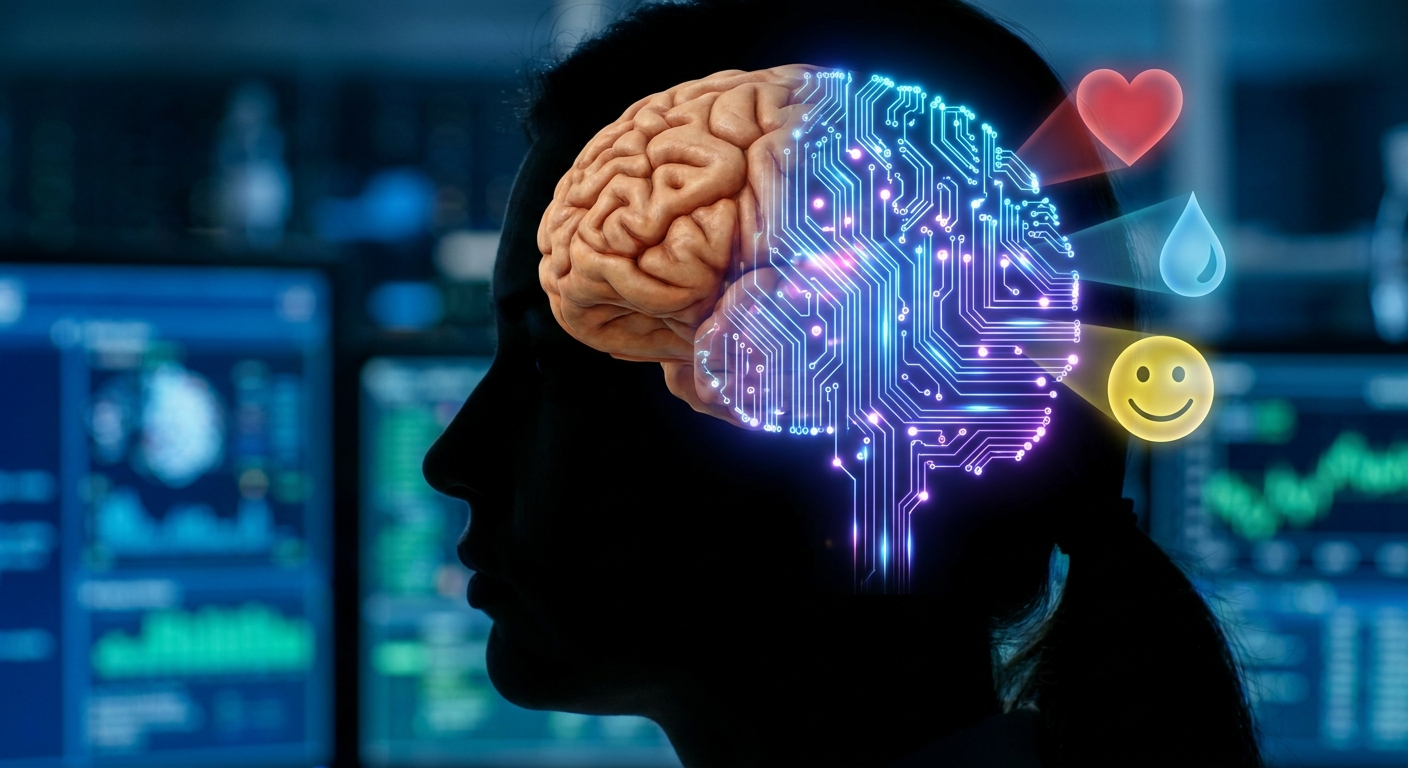
- Dopamine system: Signals prediction and reward, not just pleasure.
From effortful to effortless
In rodent maze experiments by Ann Graybiel’s lab at MIT:
- Early in learning, neuronal activity in the striatum is high throughout the maze run.
- As the behavior becomes habitual, activity “brackets” the routine—spiking at the beginning and end, with a quiet middle, as if the brain is chunking the behavior into a unit.
Your brain literally compresses repeated sequences into a single cognitive “chunk” to run with minimal supervision.
Implication: What feels like a single action (“checking my phone”) may be a whole chunk: feel bored → unlock phone → open apps → scroll.
2. Dopamine: Not the Pleasure Molecule You Were Promised
Dopamine is often miscast as the “pleasure chemical.” In habits, it plays a more subtle role: signaling prediction errors.
The classic monkey experiment
Wolfram Schultz recorded dopamine neurons in monkeys getting juice rewards:
- At first, dopamine spikes when the monkey gets juice.
- After learning that a light predicts juice, dopamine spikes at the light, not at the juice.
- If the light appears but juice doesn’t, dopamine dips below baseline.
This pattern—spike at better-than-expected, dip at worse-than-expected—teaches the brain which cues predict which outcomes.
In habits:
- Cue: triggers a learned dopamine response
- Routine: runs the “chunk”
- Reward: confirms or updates the prediction
Takeaway: Habits are partly built on dopamine’s response to prediction, not just pleasure. This is why anticipation can feel as strong as the reward itself.
3. Why Bad Habits Are So Sticky (and What Actually Changes When You Change)
Habits persist because the underlying circuits in the basal ganglia are robust once formed.
Important nuance: When you “break” a habit, you often aren’t deleting the old circuit. You’re building a competing circuit that can override it.
Evidence from rodent studies suggests:
- Old habit pathways remain latent and can be reactivated under stress or specific cues.
- New learning often involves strengthening prefrontal and alternative striatal pathways that inhibit the old response.
This aligns with human experience:
- Smokers who quit may feel “fine” for months, then get a powerful urge at a party years later.
Implication: Think “overriding and out-competing,” not “erasing,” when changing habits.
4. The Neuroscience of Tiny Changes vs. Big Transformations
You’ve likely heard that small, consistent changes matter more than huge efforts. Neuroscience backs this up.
Why small wins work
- Lower threat response: Big changes can trigger amygdala-mediated stress responses, which impair prefrontal function and make planning harder.
- More prediction success: Small shifts are easier for your brain to predict and master, delivering frequent dopamine hits of “I did it.”
- Repetition-friendly: Habits are about volume of repetitions. Small behaviors are simply easier to repeat often.
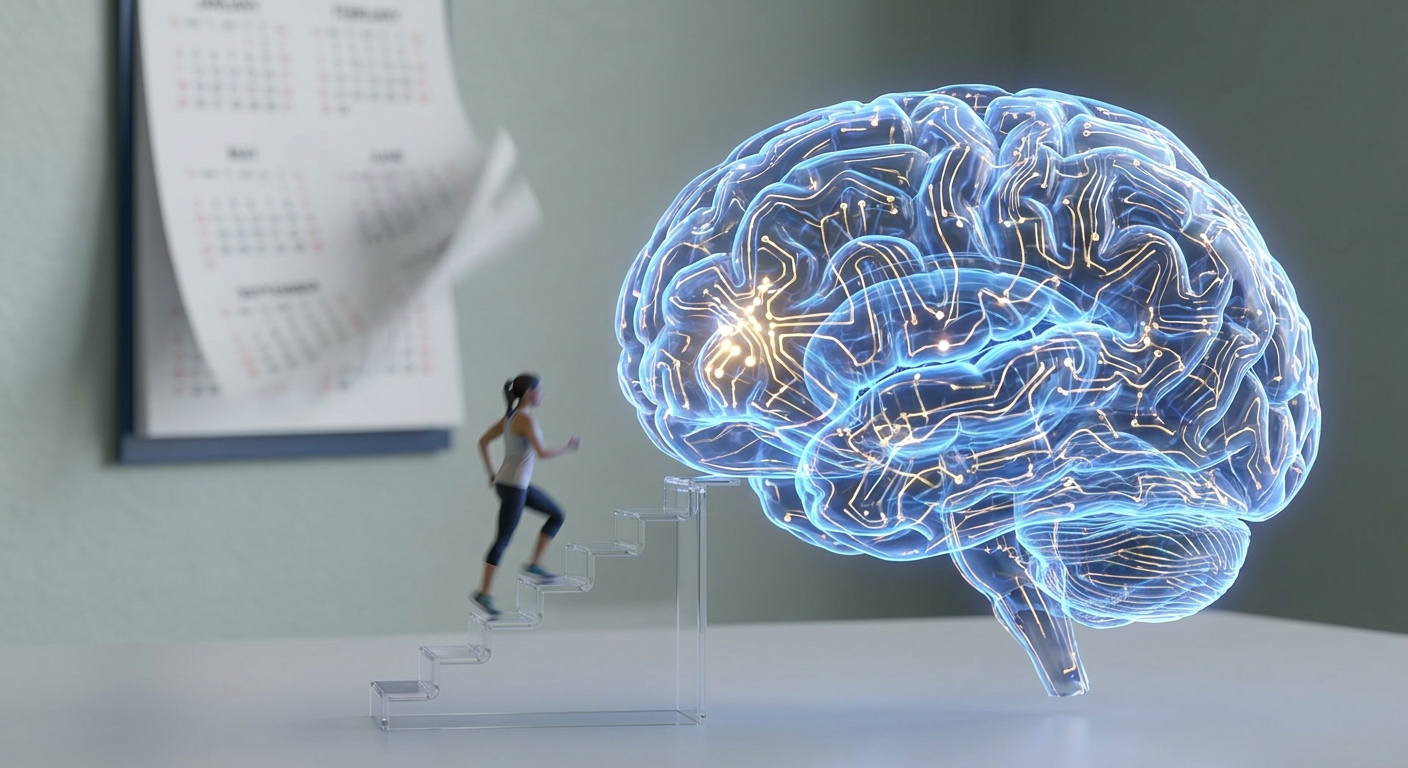
A 2010 study in the European Journal of Social Psychology by Phillippa Lally found that on average, it took about 66 days for a simple behavior to become relatively automatic, with wide variation. The key predictor was consistent repetition in a stable context, not sheer willpower.
Takeaway: Small, repeatable actions in a consistent context are the brain’s favorite building blocks for habits.
5. How to Build a Habit: A Brain-Informed Strategy
Let’s translate this into a practical protocol.
Step 1: Anchor to an existing, reliable cue
Your brain loves predictable pairings. Instead of “I’ll meditate sometime,” try:
- After I pour my morning coffee, I sit down and do 2 minutes of breathing.
You’re piggybacking on an existing, well-encoded habit (coffee) so the basal ganglia can start chunking the new sequence.
Step 2: Start embarrassingly small
Aim for the version you cannot reasonably skip.
- 1 push-up
- 2 minutes of writing
- 3 deep breaths
This keeps the amygdala’s threat response low and maximizes success-based dopamine signals. You can do more once you’ve started, but the habit target stays tiny.
Step 3: Make the reward explicit (especially at first)
Because dopamine tracks prediction and outcome, you want your brain to clearly register: Cue → Routine → Reward.
Rewards can be:
- Intrinsic: the feeling of progress, calm, mastery.
- Extrinsic: checking a box in a habit tracker, a small treat, a social acknowledgment.
Take a moment right after the behavior to mentally tag it:
“I did what I said I would do. This is who I’m becoming.”
This sounds cheesy, but you are literally framing the routine as rewarding.
Step 4: Keep the context stable
Perform the habit at the same time and in the same place when possible. Graybiel’s work suggests that repeated patterns in a stable context are what the basal ganglia chunks.
6. How to Change a Habit: Replace, Don’t Just Remove
Neuroscience suggests that it’s easier to swap routines than to eliminate them.
Use the same cue, new routine, similar reward
For example, if your pattern is:
- Cue: feel stressed while working
- Routine: open social media
- Reward: brief distraction/soothing
Try:
- Cue: feel stressed while working
- New routine: take 5 slow breaths, or walk for 1 minute, or message a supportive friend
- Reward: similar soothing, but with a healthier behavior
Over time, the cue becomes linked to the new routine instead of the old one.
Leverage “friction” to your advantage
Your brain is lazy by design. Increase friction for unwanted habits; decrease it for desired ones:
- Remove apps from your home screen; log out so it takes effort to use them.
- Lay out workout clothes the night before.
You’re not fighting your brain—you’re making the habitual option the easiest one for it.
7. Emotion, Stress, and the Habit Brain
Stress pushes the brain toward habitual responding and away from flexible, goal-directed behavior.
Studies using acute stress paradigms show:
- Stress hormones like cortisol can shift control from prefrontal cortex to dorsolateral striatum (habit circuits).
- Under stress, people default more to familiar responses even if they’re no longer optimal.
Practical meaning:
- You’re more likely to relapse into old habits when stressed.
- Building healthy habits that are strong enough to “run” under stress is a gift to your future self.
Also, self-criticism after a slip tends to increase stress, ironically making old habits more likely.
Better strategy: Treat slips as data points: What cue? What state? What context? Adjust, don’t attack yourself.
8. Identity: The Deepest Layer of Habit Change
Habits don’t just change what you do; they change how your brain represents who you are.
Neural representations of self involve midline structures (like medial prefrontal cortex). Over time, repeated behaviors and narratives become woven into this network.
James Clear’s popular advice to focus on identity-based habits—“I’m the kind of person who…”—has a neuroscientific flavor:
- When a behavior aligns with a valued identity, prefrontal circuits treat it as more important, making it easier to sustain effort.
Practical reframe:
Instead of: “I want to run a marathon,”
Try: “I’m becoming someone who moves their body most days.”
Then anchor microscopic habits to this identity. Each repetition is a small vote in your brain’s ongoing construction of “me.”
Bringing It All Together
Your habit system is not a moral scoreboard; it’s an energy-saving feature implemented by the basal ganglia, dopamine circuits, the prefrontal cortex, and stress systems.
To work with it:
- Build around reliable cues and stable contexts.
- Start tiny to bypass threat and maximize repetition.
- Highlight rewards so dopamine can reinforce the loop.
- Swap routines instead of relying on sheer suppression.
- Plan for stress, when old circuits reassert themselves.
- Link habits to an identity you genuinely value.
Changing habits is not about “fixing” a broken brain. It’s about understanding a brain that is exquisitely tuned for efficiency—and gently teaching it new shortcuts, one repetition at a time.