We talk about emotions as if they’re simple: anger here, fear there, happiness over there. Early neuroscience encouraged this view, linking the amygdala to fear and the nucleus accumbens to pleasure.
Emotions Are Not Buttons in the Brain
Modern research has complicated the picture—beautifully.
Emotions arise from networks involving body signals, past experience, prediction, and social context. Understanding these networks changes how we think about anxiety, mood, emotional intelligence, and even “gut feelings.”
1. The Myth of the “Lizard Brain”
You’ve probably heard that we have a triune brain:
- Reptilian (basic survival)
- Limbic (emotion)
- Neocortex (rational thought)
It’s a catchy story, popularized by Paul MacLean in the 1960s. But evolution doesn’t bolt on clean layers like Lego bricks.
Comparative neuroscience shows:
- Reptiles, birds, and mammals share many homologous circuits.
- The so-called “emotional” and “rational” regions are heavily interconnected.
Jaak Panksepp’s work on basic affective systems (like SEEKING, FEAR, CARE) in animals suggests deep continuity across species—but these systems don’t map neatly onto neat “layers.”
Takeaway: You don’t have a primitive animal fighting a civilized human in your head. You have integrated systems negotiating constantly.
2. The Amygdala Is Not the “Fear Center” You Think It Is
The amygdala became famous as the brain’s fear hub after Joseph LeDoux’s classic conditioning experiments in rodents.
Over time, LeDoux himself refined this view:
- The amygdala is crucial for detecting and learning about significance, especially threats.
- But fear as a conscious feeling also depends on cortical networks that interpret these signals.
Human imaging studies show amygdala activation for:
- Positive stimuli (e.g., rewards, attractive faces)
- Novel or ambiguous situations
- Social evaluations
In patients with damaged amygdalae, some aspects of fear conditioning are impaired, but they can still report fear in many contexts.
Better description: The amygdala is part of a relevance detector network, not a simple fear button.
3. Emotions as Predictions About the Body
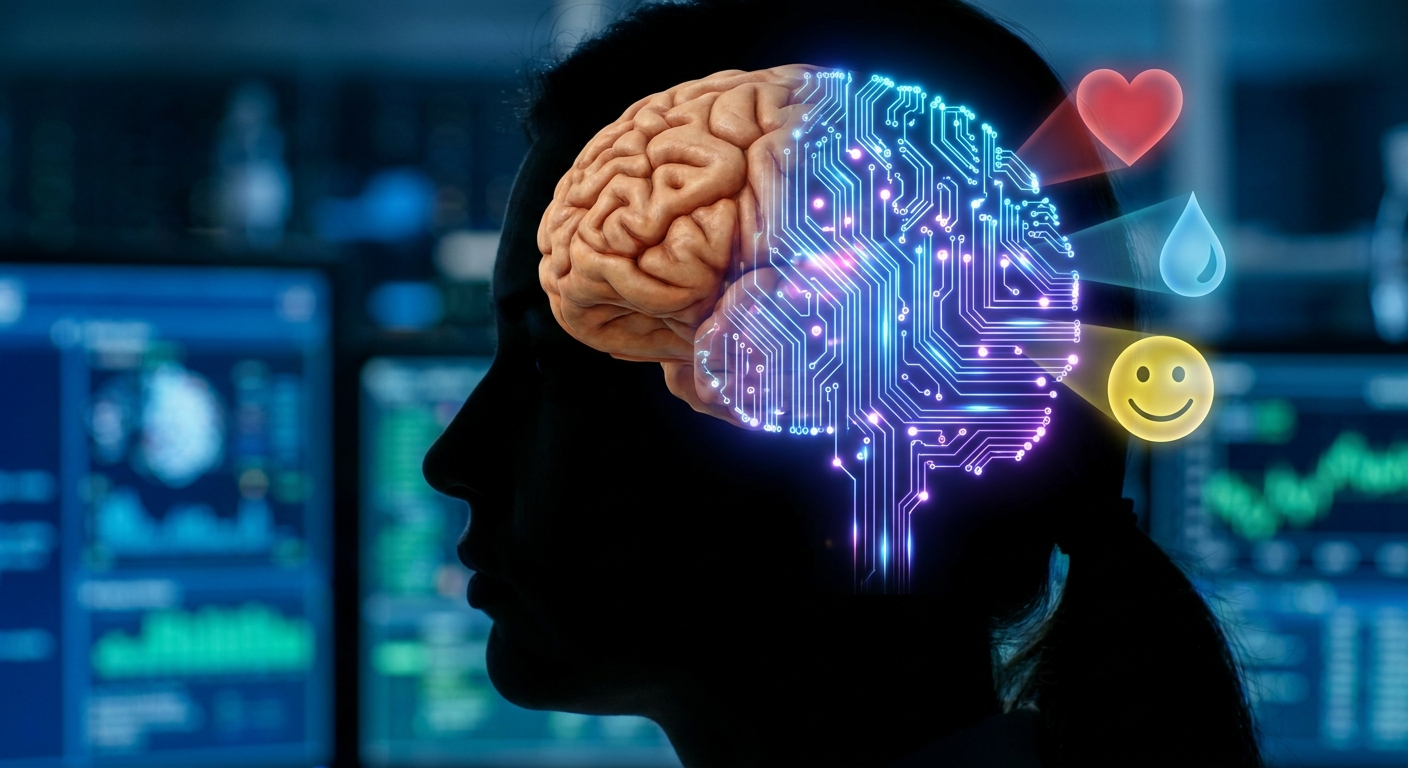
A powerful modern theory, championed by Lisa Feldman Barrett and others, views emotions as the brain’s predictions about internal bodily states in a specific context.
Key concepts:
- Interoception: The brain’s sensing of bodily signals—heartbeat, breath, gut, temperature.
- Prediction: The brain infers, “What do these signals mean right now?” based on past experience.
Example:
- Racing heart + sweaty palms + loud music + friends dancing → predicted as excitement.
- Same bodily signals + dark alley + footsteps behind you → predicted as fear.
Same physiology, different emotion. The difference lies in interpretation and context.
Neuroimaging implicates regions like the insula and anterior cingulate cortex in integrating interoceptive signals with contextual information.
Implication: Your feelings are not raw data; they’re interpretations.
4. How Emotional Memories Shape Today’s Feelings
Our brains rarely encounter situations entirely anew. Emotional responses are guided by past experiences stored in networks linking:
- Hippocampus (contextual memory)
- Amygdala (significance and threat learning)
- Prefrontal cortex (interpretation and regulation)
Classic example:
- A neutral odor was paired with a mild shock in a 2014 study (Neuron). Later, just the odor triggered amygdala and insula activity and defensive responses.
Over time, these learned associations become implicit:
- You feel uneasy around a certain type of person or place without knowing why.
Counterintuitive twist: Your strong emotional reactions are often about your past, not the present—though they’re experienced as immediate truth.
5. Emotional Regulation: More Than “Calming Down”
We often imagine emotion regulation as suppressing feelings. Neuroscience suggests a richer toolbox.
Major strategies and their brain correlates:
1. Reappraisal (changing the meaning)
- Example: Interpreting anxiety as “my body gearing up to perform” instead of “I’m in danger.”
- Neural signature: Increased activity in prefrontal regions (like dorsolateral PFC) and decreased amygdala activation.
- A 2010 meta-analysis in Biological Psychiatry found reappraisal to be one of the most effective and sustainable regulation strategies.
2. Attentional shifting
- Example: Focusing on neutral aspects of a situation instead of the threat.
- Involves parietal and frontal attention networks.
3. Body-based regulation
- Slow breathing, grounding, movement.
- Alters interoceptive signals entering insula and autonomic control centers in the brainstem.
Important: Chronic suppression—trying not to feel—tends to increase physiological arousal and impair memory for what happened.
Takeaway: The goal isn’t to “turn off” emotion, but to change the story and signals your brain uses to construct it.
6. Why Emotional Intelligence Is Also Body Intelligence
Emotional intelligence (EQ) is usually framed as a social skill set. But at its core, EQ requires accurate interoception and flexible prediction.
Studies have found:
- People more accurate at detecting their own heartbeat show stronger insula activation and often more nuanced emotional awareness.
- Alexithymia (difficulty identifying and describing emotions) is associated with atypical interoceptive processing.
In other words, to understand your feelings, your brain must:
- Receive relatively clear signals from the body.
- Have a rich “concept library” of emotional categories.
- Flexibly apply those concepts to interpret bodily states.
Practical implications:
- Practices like mindfulness, slow breathing, or yoga can improve interoceptive awareness.
- Expanding your emotional vocabulary (beyond “good/bad”) gives your brain finer predictive tools.
7. Anxiety and Depression Through a Predictive Brain Lens
Viewing emotions as predictions sheds new light on common mental health challenges.
Anxiety
Chronic anxiety can be seen as a hypervigilant prediction system:
- The brain overestimates threat and uncertainty.
- Body sensations (like a racing heart) are interpreted as signs of danger.
Therapies like CBT and exposure can be understood as:
- Providing prediction error in a safe context: “I felt anxious and nothing terrible happened.”
- Gradually updating the brain’s threat model.
Depression
Depression often involves:
- Reduced activity in reward circuits (e.g., ventral striatum)
- Rigid, negative predictions about the future: “Nothing will help; nothing is worth doing.”
Behavioral activation—a core therapy—involves taking small, rewarding actions despite low motivation, giving the brain new evidence that contradicts its bleak predictions.
Key idea: In both anxiety and depression, the goal is not brute-force positivity, but updating faulty predictions with lived, corrective experiences.
8. Practical Ways to Work With Your Emotional Brain
Here are accessible, evidence-aligned practices:
1. Name your emotions precisely
A 2015 study in Psychological Science found that people who used more granular emotional labels (e.g., “irritated” vs. generically “bad”) coped better with stress.
Try: When you feel “bad,” see if you can find a more specific word: frustrated, disappointed, lonely, overwhelmed, restless.
You’re giving your predictive brain a more precise model.
2. Check the body, not just the story
Ask:
- Where do I feel this in my body?
- What are my breath, posture, and muscles doing?
Then experiment with small body changes:
- Lengthen your exhale.
- Release your shoulders.
- Unclench your jaw.
You’re altering the raw data your brain is predicting from.
3. Run “alternative prediction” experiments
When a strong emotion hits, your brain is making a confident prediction: “This is terrible,” “I can’t handle this,” “They must hate me.”
Counter with a curiosity experiment:
- “What’s one other possible explanation?”
- “What happens if I stay in this situation for 5 more minutes?”
You’re not forcing a new belief; you’re cautiously gathering counterevidence.
4. Build an emotional library
Read or journal about nuanced emotional experiences. Note subtle differences: envy vs. admiration, anxiety vs. anticipation.
You’re enriching your brain’s concept network, which supports more flexible emotion construction.
The Bigger Picture: Emotions as Guides, Not Enemies
Far from being irrational glitches, emotions are your brain’s way of summarizing vast amounts of bodily, contextual, and historical data into an actionable signal.
They are not always accurate, but they are always informative.
When you see emotions as constructed predictions instead of mysterious forces, new options open up:
- You can question the prediction without denying the feeling.
- You can adjust body states to influence the construction.
- You can update the brain’s model through lived experience.
Your emotional brain is not an opponent to defeat. It is an exquisitely tuned forecasting system trying—sometimes clumsily—to keep you safe and connected. Learning its language is one of the most powerful forms of self-understanding we have.