We’re told that “the brain is plastic” and that you can rewire your mind at any age. At the same time, we all know people who seem stubbornly themselves across decades.
The Promise and Limits of a Changeable Brain
So which is it? Is personality fixed or flexible? Are intelligence and attention mostly inherited, or can training reshape them? Neuroscience offers a nuanced answer: your brain is both more and less changeable than most slogans suggest.
Let’s compare what is relatively stable with what is surprisingly malleable—and how to work with both.
1. What Neuroscientists Mean by “Plasticity”
Neuroplasticity refers to the brain’s ability to change its structure and function in response to experience.
Major types include:
- Synaptic plasticity: Changes in the strength of connections between neurons (e.g., long-term potentiation, LTP).
- Structural plasticity: Growth of new connections, dendritic branches, and in some regions, new neurons.
- Functional reorganization: Brain areas taking on new roles after injury or training.
Classic examples:
- Violinists show enlarged representation of the left-hand fingers in somatosensory cortex (Elbert et al., Science, 1995).
- London taxi drivers exhibit increased hippocampal volume after years of navigation training (Maguire et al., PNAS, 2000).
These are not motivational posters; they are measurable anatomical changes.
2. The “Fixed” Side: Genetic and Early-Life Influences
Plasticity unfolds within constraints.
Genetic influences
Twin and family studies suggest that many traits are moderately heritable:
- General intelligence (IQ): heritability estimates often around 0.5–0.8 in adulthood.
- Personality dimensions (like extraversion, neuroticism): often 0.4–0.5.
Heritability does not mean immutability. It means that in a given population and environment, a substantial proportion of differences between people can be statistically linked to genetic variation.
Sensitive periods
Certain systems have windows of heightened plasticity:
- Vision: Deprivation of input in early life can cause permanent deficits (Hubel & Wiesel’s classic work).
- Language: Accent acquisition is much easier in childhood.
After these periods, plasticity doesn’t vanish but requires more effort or may never reach the same level.
Key idea: Plasticity is not a blank check; it’s a capacity shaped by genes, development, and current environment.
3. Personality: Stable, Yet Shiftable
Longitudinal studies show that personality traits are relatively stable over time—but not frozen.
Meta-analyses have found:
- Rank-order stability (whether the most extraverted 20-year-olds are still among the most extraverted at 40) is high.
- Mean-level changes (average shifts for everyone) do occur: on average, people become more agreeable and conscientious with age.
Can intentional effort change personality? Emerging evidence says yes, modestly.
A 2017 study in Psychological Science had participants work on changing a Big Five trait (e.g., becoming more extraverted) over 16 weeks.
- They engaged in weekly tasks and reflections.
- Result: Self-reported traits changed in the desired direction; some changes were corroborated by informant ratings.
Neuroscience is beginning to link such personality shifts to changes in:
- Prefrontal control networks
- Default mode network dynamics (linked to self-related thinking)
Takeaway: Personality provides tendencies, not destiny. Deliberate practice can bend the arc, especially when grounded in consistent behavior over months and years.
4. Intelligence and Cognitive Skills: More Trainable Than You Think (But Not Infinitely)
The idea that “IQ is fixed” is too simple.
Training specific skills
Working memory, attention, and reasoning can be improved with practice on specific tasks.
- Participants training on demanding working-memory tasks (e.g., dual n-back) show improvements on similar tasks and changes in prefrontal and parietal activation.
- Aerobic exercise has been repeatedly linked with better executive function and increased hippocampal volume in older adults (Erickson et al., PNAS, 2011).
However, broad “brain training” claims have often overreached:
- Gains tend to be task-specific; transfer to very different skills is limited.
- A large consensus statement by leading neuroscientists (2014) cautioned against exaggerated commercial claims.
Environmental impacts across life
- Education, nutrition, and early cognitive stimulation can raise cognitive performance.
- Even in later adulthood, engaging in complex, meaningful activities (learning a language, musical instrument, or a cognitively demanding job) correlates with preserved gray matter and cognitive resilience.
Realistic view: You can absolutely become sharper, more focused, and more mentally agile—but you are shaping a brain with certain built-in constraints, not starting from a blank slate.
5. Attention and Digital Environments: Plasticity With a Price Tag
Your attentional system is highly plastic—and your devices know it.
Repeated, fragmented engagement with digital media can train:
- Shorter attention spans
- Stronger novelty-seeking impulses
- Strong cue–response loops (notification → check → micro-reward)
Neuroimaging work implicates reward pathways (ventral striatum) and attentional networks in reinforcing these patterns.
On the flip side, training sustained attention through:
- Mindfulness meditation
- Focused work blocks
- Deliberate boredom tolerance
has been associated with structural and functional changes in:
- Anterior cingulate cortex (conflict monitoring)
- Prefrontal cortex (top-down control)
- Insula (interoceptive awareness)
Takeaway: Where your attention repeatedly goes, neural reinforcement follows. Your media diet is literally shaping your attentional brain.
6. Emotional Patterns: Among the Most Malleable Circuits
While baseline temperamental tendencies may be partly inherited, emotional habits—how you typically respond to stress, interpret events, and regulate feelings—are quite trainable.
Therapies like CBT, ACT, and mindfulness-based interventions have shown that:
- Repeated cognitive reappraisal can reduce amygdala reactivity and strengthen prefrontal regulation.
- Mindfulness practice alters default mode network activity and increases connectivity in attention and emotion-regulation circuits.
A 2016 meta-analysis in JAMA Internal Medicine found mindfulness programs produced moderate improvements in anxiety, depression, and pain.
From a plasticity standpoint:
- Each time you respond to a trigger with a new pattern (e.g., curiosity instead of self-attack), you weaken the old association and strengthen a new one.
Implication: Your “emotional personality” is particularly open to change, especially with structured practice and supportive environments.
7. Practical Ways to Harness Plasticity Without Magical Thinking
How can you work with a brain that is changeable but constrained?
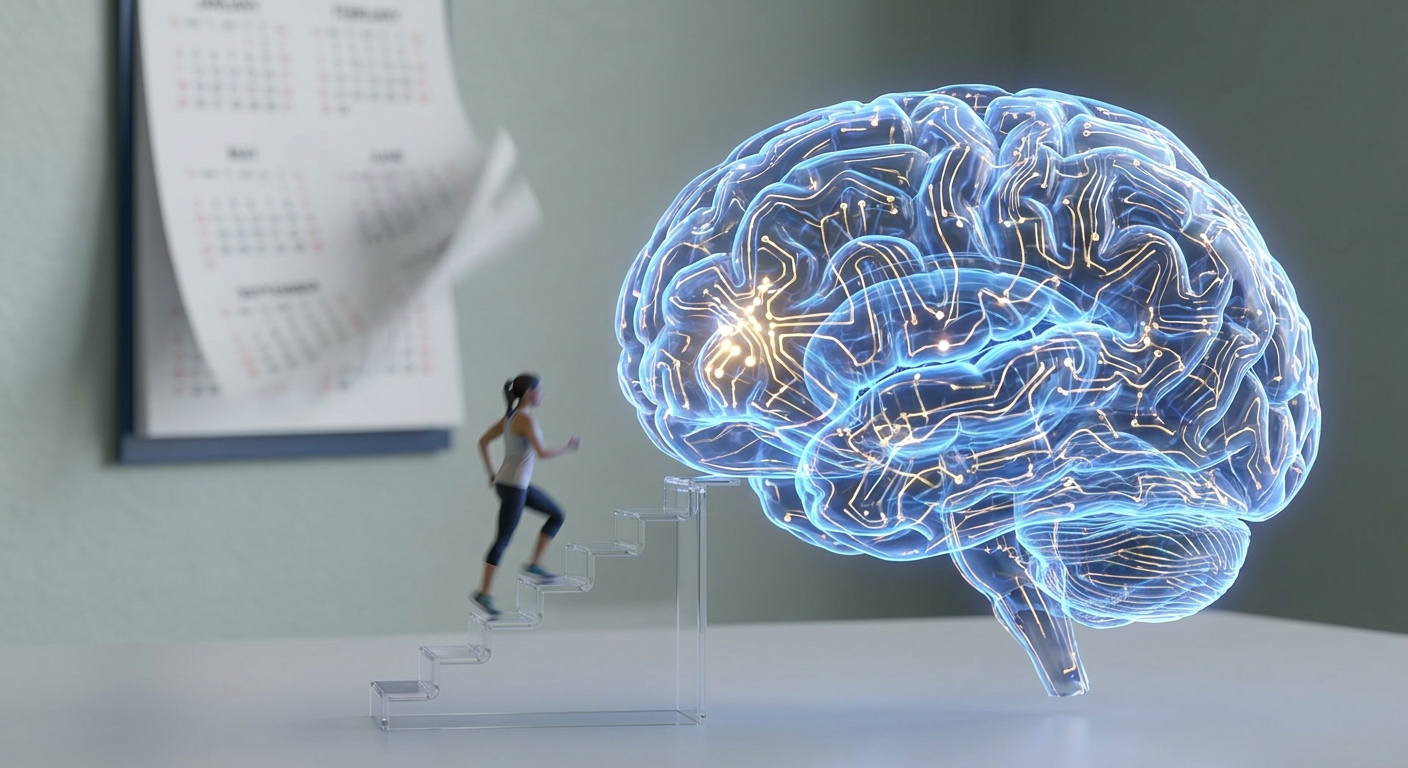
1. Think in months and years, not days
Structural and personality-level changes emerge over hundreds or thousands of repetitions.
- Design small, sustainable practices (10–20 minutes daily) rather than heroic but short-lived sprints.
2. Combine cognitive, behavioral, and bodily approaches
Plasticity is greatest when changes happen:
- In thought patterns (cognitive)
- In actions and environments (behavioral)
- In body states (sleep, exercise, nutrition)
For example, to improve focus:
- Cognitive: Clarify priorities each day.
- Behavioral: Use time-blocking; remove distractions.
- Bodily: Exercise regularly; protect sleep.
3. Respect individual differences
Two people can follow the same regime and show different degrees of change due to genetics, prior learning, and context.
This is not failure; it’s biology.
Focus on relative change (your trajectory) rather than chasing someone else’s baseline.
4. Use environments as external brain scaffolding
Because the brain is so context-sensitive, stable external structures support internal change:
- Regular routines
- Physical cues (notes, checklists, layouts)
- Social accountability
You’re turning the world into an ally for your plastic brain.
5. Aim to change systems, not just single traits
Instead of “How do I become less anxious?” ask:
- How can I gradually update my threat predictions?
- How can I build habits that increase safety and competence?
- How can I alter my environment to reduce unnecessary stressors?
Traits then shift as downstream consequences of system-level changes.
A More Honest, Hopeful View of Change
Neuroplasticity is not a magic wand; it’s a set of biological mechanisms that allow your brain to be continuously shaped by what you do, feel, and pay attention to.
Some aspects of you—like general temperament or cognitive style—may always have a recognizable signature. But within those outlines is enormous room for growth.
Your task is not to become anyone you want, but to become the best version of the brain you actually have:
- Designing environments that bring out its strengths
- Training skills that matter over time
- Gently challenging its limits
When you do that consistently, plasticity stops being a slogan and becomes something quieter and more powerful: a long, slow conversation between your experiences and the evolving architecture of your mind.