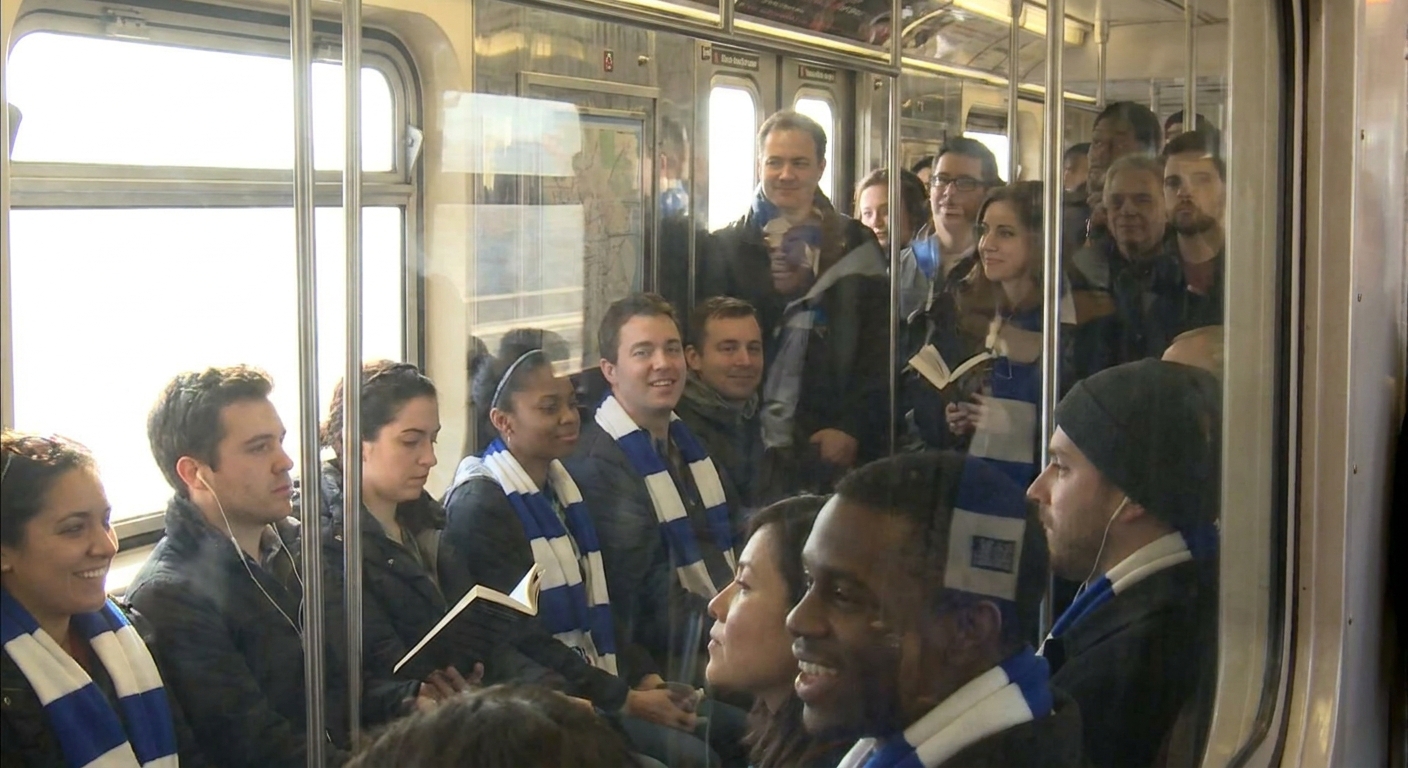
Within milliseconds of seeing someone, your brain silently answers questions you never consciously asked:
Your Brain’s Two-Second Biography
- Can I trust this person?
- Are they competent?
- Are they “my kind of person”?
These first impressions are fast, automatic, and often feel like intuition. Social psychology offers a more precise description: they’re rapid inferences built from learned shortcuts—and they’re powerful enough to influence hiring decisions, criminal sentencing, elections, and everyday relationships.
We’ll explore how first impressions form, what they get right and wrong, and how to update them more intelligently.
Thin Slices: How Little Information We Actually Need
In the 1990s, psychologist Nalini Ambady pioneered research on thin slices of behavior—brief snippets of social interaction.
In one study, students watched 10-second, silent clips of professors teaching and rated them on dimensions like warmth and competence. Their ratings closely matched evaluations from students who took the full course.
Even more striking:
- Reducing the clips to 5 seconds or 2 seconds hardly changed the accuracy.
Ambady’s work suggests that people can extract meaningful information from very brief behavior samples. Our social perception system is tuned for speed.
But speed comes with trade-offs.
The Two Big Dimensions: Warmth and Competence
Across cultures, we tend to evaluate others along two primary dimensions:
Warmth (or trustworthiness): Are you kind or hostile? Friend or foe?
Competence: Are you capable or inept? Asset or liability?
Susan Fiske and colleagues call this the stereotype content model. For survival, it made sense: first, figure out someone’s intentions (warmth), then their ability to enact those intentions (competence).
These quick judgments affect how we treat people:
- Warm and competent → admiration.
- Warm but incompetent → pity.
- Cold but competent → envy.
- Cold and incompetent → contempt.
First impressions often set people into these boxes before they say a single word.
Faces, Voices, and Clothes: The Raw Materials of Judgment
1. Faces and Trustworthiness
Research by Alexander Todorov and colleagues found that people form impressions of trustworthiness from faces in 100 milliseconds.
More unsettling:
- Judgments based on split-second face impressions predicted real election outcomes. Candidates whose faces looked more “competent” to naive observers were more likely to win.
These facial judgments are not reliably accurate measures of character—but people treat them as if they are.
2. The Halo Effect
The halo effect is a cognitive bias where one positive trait (e.g., physical attractiveness) spills over into other judgments.
In a classic study by Dion, Berscheid, and Walster, participants rated more attractive people as also more kind, more successful, and more socially skilled—even with no additional information.
Attractiveness can lead to better treatment in hiring, legal outcomes, and everyday interactions—not because beauty equals virtue, but because our brains like coherent stories.
3. Voices and Confidence
A confident, steady tone of voice can dramatically influence perceived competence. People often mistake fluency (smooth speech) for accuracy.
Hesitations—“um,” “uh,” long pauses—can unfairly signal uncertainty or lower status, especially in high-stakes settings like job interviews or presentations, even when the content is strong.
When First Impressions Are Systematically Biased
Our snap judgments don’t emerge in a vacuum; they’re shaped by cultural stereotypes and personal experiences.
Implicit Bias and Automatic Associations
Implicit Association Tests (IATs) show that many people, including those who consciously reject prejudice, have faster automatic associations like:
- male–science vs. female–science
- white–good vs. Black–good
These biases can influence first impressions without our awareness.
For example:
- Résumé studies show identical CVs with “white-sounding” names receive more callbacks than those with “Black-sounding” names.
- Blind auditions in orchestras (where musicians perform behind a screen) significantly increased the hiring of women, suggesting that visual first impressions had previously biased judges.
Confirmation Bias: Locking in Too Soon
Once we form a first impression, we tend to:
- Notice information that confirms it.
- Discount or forget information that contradicts it.
If you initially see someone as cold, their neutral behavior may be interpreted as aloof. If you see them as warm, the same behavior might be seen as reserved but kind.
Can We Trust Our Intuition? The Nuanced Answer
First impressions are not useless; they’re probabilistic guesses.
They can be reasonably good at:
- Detecting broad traits like extraversion vs. introversion.
- Gauging emotional states (happy, angry, bored).
But they’re unreliable for:
- Moral character (“good person” vs. “bad person”).
- Competence in complex domains (job performance, intelligence).
- Group-based judgments heavily tied to stereotypes.
The danger is not that we have first impressions, but that we confuse them with reality—and stop updating them.
How to Make Smarter First Impressions (On Others and Yourself)
1. Slow Down Your Certainty, Not Your Perception
You can’t stop your brain from generating snap judgments. What you can slow down is your confidence in them.
A simple internal script:
- Instead of “She is arrogant,” try “My first impression is that she seems arrogant; I wonder what else might be going on.”
This small linguistic shift leaves room for revision.
2. Look for Disconfirming Evidence
Deliberately ask yourself:
- “What have I seen that doesn’t fit my initial impression?”
- “If I had to argue the opposite (that they’re kind/competent), what data could I use?”
This counters confirmation bias and invites nuance.
3. Separate Content from Style
Notice when your judgment is mostly about presentation:
- Are you dismissing an idea because the speaker seems nervous?
- Are you overvaluing confidence as a proxy for competence?
In group settings, leaders can slow this bias by:
- Asking quieter members directly for input.
- Reviewing written ideas without names attached.
4. Make Your Own First Impressions Work for You
If you want to be perceived more accurately and generously:
- Warmth first, then competence. People are more receptive to your skills if they feel you’re on their side.
- Nonverbal signals: Eye contact, open posture, slightly slower speech, and genuine smiles all convey approachability.
- Context cues: Shared group markers (university, profession, interest) can activate a sense of “us,” softening harsh initial judgments.
This isn’t about manipulation; it’s about letting your actual qualities show through the noise of others’ biases.
A Useful Mental Model: Provisional Impressions
Think of first impressions as drafts, not final reports.
A practical approach:
- Let your brain make its fast judgment. You can’t stop it.
- Label it: “This is my first impression, not the truth.”
- Collect at least three concrete observations before upgrading your impression.
- Be willing to revise, especially after meaningful interactions or new contexts.
Everyday Experiments You Can Try
To see your impression machinery in action, try these small experiments:
- Silent commute: On public transit, notice your instant impressions of three people. Then imagine three radically different, plausible backstories for each. Feel how your affect toward them shifts.
- Delayed opinion rule: For the next week, when you meet someone new in a non-urgent context, delay strong conclusions (positive or negative) until after your third substantial interaction.
- Reverse the lens: Ask a trusted friend what their first impression of you was. Compare it to how you see yourself. Where did they miss—and what signals might have led them there?
Why This Matters
First impressions are a feature of human cognition, not a bug. They allow us to navigate crowded, complex social worlds quickly.
But in a world where short interactions can decide jobs, relationships, and opportunities, treating those impressions as unquestionable truths is costly—for us and for others.
By understanding the science of first impressions, you gain a quiet power:
- To give people a bit more room to be more than your first story about them.
- To present yourself in ways that better reflect your real strengths and intentions.
- To build environments—classrooms, teams, communities—where people are evaluated more on evidence than on milliseconds.
Our snap judgments may be fast, but our wisdom doesn’t have to be.