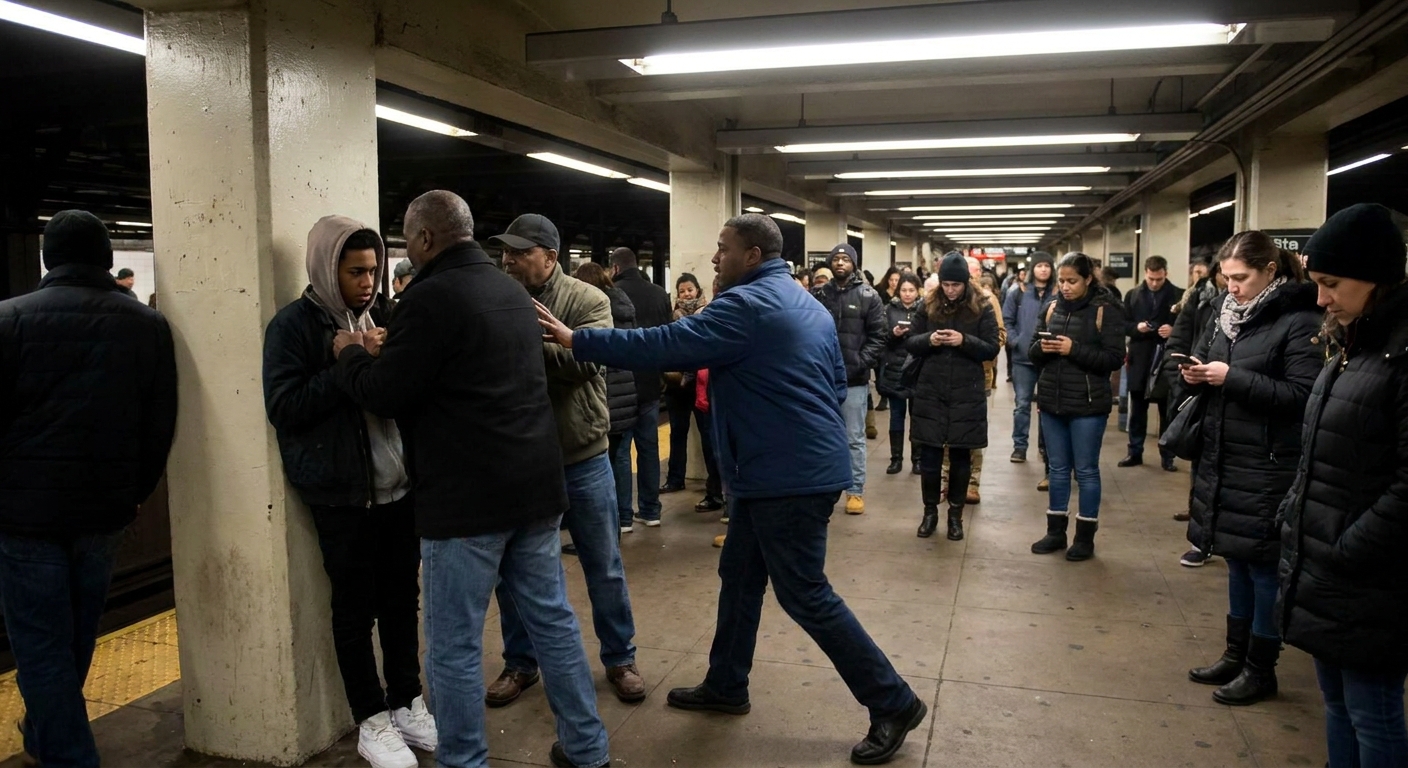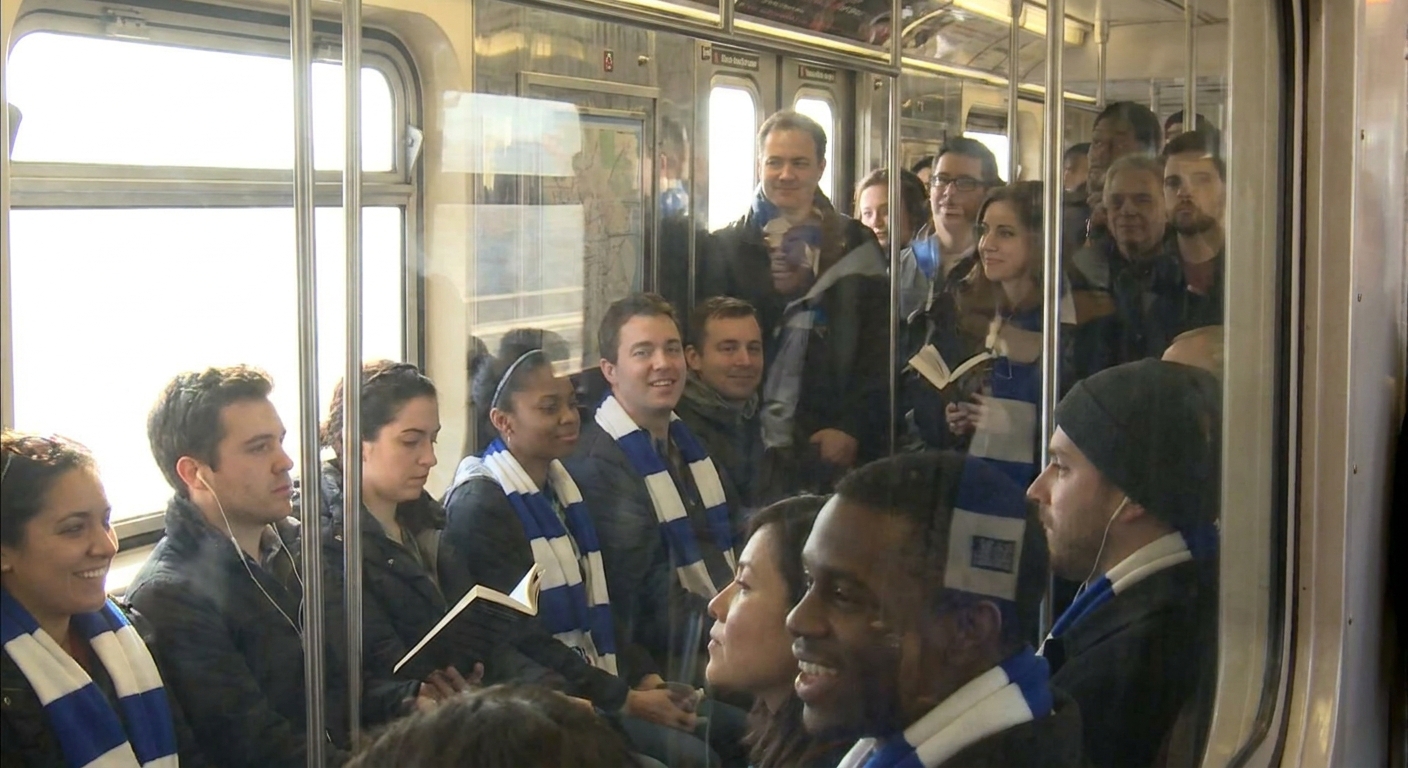
You walk into a room and, within seconds, your mind has sorted people into categories: my age / not my age, my style / not my style, my crowd / not my crowd. You didn’t choose to do this. Your brain did it for you.
Your Brain’s Favorite Story: "People Like Us"
Social psychology calls this social identity: the part of your self-concept that comes from your membership in groups—nationality, profession, fandoms, political leanings, even your favorite sports team. These identities don’t just describe you; they shape how you think, feel, and act.
We’ll explore how social identity forms, why it drives both empathy and prejudice, and how you can use it to widen—not shrink—your sense of “us.”
The Minimal Group: How Little It Takes to Create an “Us” vs. “Them”
Henri Tajfel, one of the founders of social identity theory, ran a set of beautifully simple (and uncomfortable) experiments.
Participants—often schoolboys—were:
- Shown paintings by Klee and Kandinsky and asked which they preferred, or
- Randomly assigned to groups based on trivial tasks like guessing the number of dots.
Then they were asked to allocate small amounts of money to anonymous others, labeled only by group (e.g., "Group A" or "Group B").
The results were startling:
- People consistently favored their own group.
- They sometimes sacrificed absolute gain for their group in order to maintain a relative advantage over the other group.
Even meaningless, temporary groups were enough to spark favoritism.
Lesson: We don’t need deep histories or meaningful differences to create in-groups and out-groups. Our minds are eager to draw those lines.
The Social Identity Engine: How Groups Shape the Self
Tajfel and John Turner proposed Social Identity Theory, which suggests that:
- We categorize people: “student,” “manager,” “gamer,” “parent,” “immigrant.”
- We identify with some groups: “These are my people.”
- We compare our in-groups with out-groups, usually favoring our own.
This helps answer a subtle question: Why do we feel personally proud when “our” sports team wins, even though we didn’t play?
Because their victory becomes our victory. The group’s status reflects on our own self-esteem.
Neuroscience aligns with this idea. Brain imaging studies show that areas involved in thinking about the self (like the medial prefrontal cortex) also activate when we think about our in-groups. Psychologically, “we” and “I” heavily overlap.
When Identity Helps: Belonging, Meaning, and Resilience
Social identities are not just the villains behind tribalism; they’re also deeply protective.
1. Belonging and Mental Health
Research consistently shows that strong, positive group identities can:
- Buffer against stress
- Reduce loneliness
- Protect against depression
For example, Alex Haslam and colleagues developed the “Social Cure” framework, showing that multiple meaningful group memberships (family, community, hobbies, religious or professional groups) are linked to better health and resilience.
People who feel they belong somewhere are less likely to feel adrift everywhere.
2. Purpose and Collective Action
Social identity also motivates action.
- People are more likely to volunteer, donate, or protest when they feel connected to a community that values those actions.
- Environmental behaviors often spread not simply through personal concern, but through seeing “people like me” acting in sustainable ways.
Identity tells us not just who we are, but what people like us do.
The Shadow Side: Bias, Stereotypes, and Dehumanization
The very mechanisms that give us belonging can also fuel bias.
In-Group Love vs. Out-Group Hate
A key nuance: in-group favoritism does not always equal out-group hatred. Many biases start subtly.
- Hiring “people who are a good fit” can mean preferring those who share your background.
- Helping “our own” first during scarcity can unintentionally exclude others.
Over time, though, unchecked favoritism plus threat can turn into hostility.
The Robbers Cave Experiment: Conflict by Design
In the 1950s, Muzafer Sherif took boys to a summer camp (Robbers Cave State Park) and unknowingly enrolled them in one of the most famous social psychology experiments on group conflict.
- The boys were randomly divided into two groups (the “Eagles” and the “Rattlers”).
- Each group bonded separately, forming strong identities.
- Sherif then introduced competition—tug-of-war, baseball games—with prizes for the winners.
Conflict quickly escalated:
- Name-calling
- Flag-burning
- Cabin raids
The boys didn’t start out as enemies; they became enemies through group identity plus competition.
Reducing Conflict: Superordinate Goals
Sherif didn’t stop there. He wanted to know how to heal the divide.
He introduced superordinate goals—problems that required both groups to cooperate:
- A “broken” water supply they had to fix together
- A stalled truck they had to jointly pull
Over time, hostility faded. The boys began to eat together, ride the same bus, even mix friendships.
Key idea: Shared identity (“We’re all campers who need water”) can overshadow rival identities (“We’re Eagles vs. Rattlers”).
How Identities Shift: Context, Frames, and Multiple Selves
You do not have a single social identity. You have many, and context decides which one steps forward.
- In a family gathering, you might feel primarily like a sibling or child.
- At work, your professional identity leads.
- In a political discussion, your ideological identity might dominate.
Studies find that making one identity more salient can change behavior.
For example:
- Asian-American women performed better on a math test when their Asian identity (linked to stereotypes of math ability) was subtly highlighted, and worse when their female identity (linked to stereotypes about women and math) was highlighted.
This doesn’t mean the stereotypes are true; it means our expectations about “people like me” can unconsciously guide performance.
Practical Ways to Work With Social Identity (Instead of Against It)
1. Expand Your Circle of “Us”
Rather than trying to eliminate group identities (which rarely works), you can layer them.
Ask:
- “What do we share?” instead of “How are we different?”
- “Is there a broader identity that includes both of us?” (e.g., parents, researchers, neighbors, humans who care about fairness).
This is called common in-group identity: reframing “us vs. them” as a larger “we.”
2. Be Curious About Your Own Group Loyalties
Notice when a reaction in you feels bigger than the situation:
- Intense defensiveness when a group you belong to is criticized.
- Over-identification with “your side” in sports, politics, or work debates.
Ask:
- “Is my self-worth tied up in this group being right or better?”
- “Can I separate critique of the group from critique of me as a person?”
That tiny bit of distance can open space for dialogue.
3. Use Identity to Support Healthy Change
If you want to build a new habit or resist a destructive one, tie it to identity:
- Instead of “I should exercise more,” try “I’m the kind of person who takes care of my body.”
- Instead of “I should read more,”: “I’m a reader; I’m curious.”
Behavior becomes an expression of who you are, not just a task on a list.
4. In Conflict, Look for Superordinate Goals
When you’re in a polarized situation:
- Identify something both sides genuinely care about (safety, fairness, stability, dignity).
- Use language that highlights shared identity: “As parents…”, “As residents of this city…”, “As people who care about science…”.
This doesn’t erase differences, but it softens the psychological wall between “us” and “them.”
A Quiet Daily Practice: Catching “Them” in the Act
For the next week, try a simple experiment:
- Every time you think or say “they,” pause.
- Ask: “Which identity am I assuming they have? Which identity am I speaking from?”
- Then ask: “Is there any identity we might share?”
Sometimes the answer will be no. But even asking the question makes your social identity machinery more visible. And once it’s visible, you have far more room to choose how you relate—to yourself, your groups, and the people who don’t (yet) feel like “us.”
Social identity isn’t a flaw in human psychology; it’s one of its central organizing principles. The art is not to transcend identity altogether, but to widen, flex, and choose which identities we let steer our lives.